





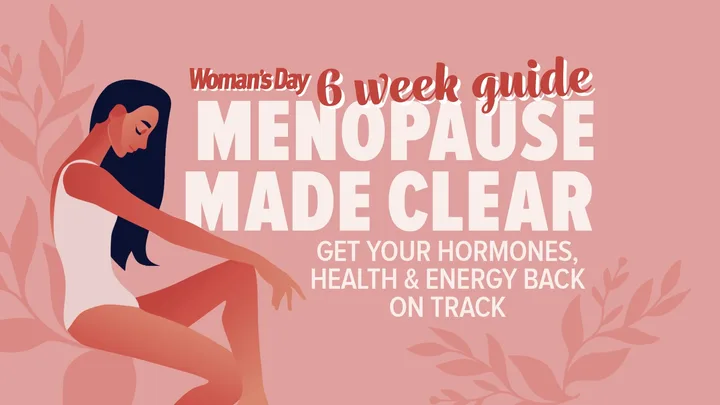
Perimenopause – the years leading up to menopause – can affect almost every part of your body, yet many women simply don’t realise what’s happening until they’re well into the transition.
“Many women attribute these everyday symptoms to burnout, stress or even depression, not realising hormones are at the root,” says GP Dr Joanna Bruce.
Understanding symptoms is key
We spoke to Dr Joanna Bruce, practice owner and specialist GP and Registered nurse and health coach Anna-Klara Skarp at Myma Health in Sydney, about navigating perimenopause and menopause, from understanding the changes happening in your body to the treatment options and lifestyle shifts that can make a real difference.
Over the next six weeks, Dr Bruce and Anna-Klara Skarp will share their expert advice on the symptoms to look out for, the latest treatment options and the practical steps women can take to feel healthier, stronger and more like themselves through menopause and beyond.

It’s not just about periods
Perimenopause is the transitional phase before menopause, when the ovaries gradually produce less estrogen and progesterone. But, as Dr Bruce explains, the process isn’t straightforward.
“The decline isn’t linear – it’s erratic, with hormone levels spiking and dipping unpredictably,” she says.
“Progesterone tends to drop first, which can worsen anxiety and sleep. Estrogen fluctuations affect virtually every system – the brain, cardiovascular system, muscles and joints, skin, gut and mood.”
Symptoms can include irregular or heavier periods, worsening PMS, brain fog, disrupted sleep, low libido, heart palpitations, joint pain and increased sensitivity to stress.
Why are we only hearing about this now?
Despite affecting half the population, menopause has long been misunderstood.
“Historically, menopause was a taboo topic, and research into women’s hormonal health has been significantly,” says Dr Bruce. “Many doctors received little training on perimenopause, and cultural silence around ‘the change’ meant women didn’t speak openly about it.”
Registered nurse and health coach Anna-Klara Skarp says women have often been left in the dark.
“If you don’t know what’s normal, how can you recognise when something shifts?” she says. “Perimenopause can begin a decade before the last period, yet most women are never told that. They’re left wondering if they’re losing their mind, when their biology is simply asking to be understood.”

It can be far-reaching
Hormonal changes don’t just trigger symptoms – they can also affect your long-term health.
“Estrogen protects bone, so the risk of osteoporosis rises. It also has a protective effect on the heart, while insulin sensitivity changes and cognitive function can be affected,” says Dr Bruce.
Anna-Klara says menopause often coincides with other major life changes.
“Perimenopause often arrives at the exact moment life is asking big questions,” she says. “Identity loss when the kids leave, marriages that quietly drift and careers that no longer fit can all happen at the same time.”
She says women should look beyond their symptoms. “Who do you want to be at 60, 70 or 80? Nervous system health, purpose and community aren’t soft extras. They’re the foundation that carries you through the second half of life.”
Trust your body
Many women say they feel dismissed when they seek help because symptoms are so varied.
Dr Bruce says hormone changes can overlap with conditions including thyroid disease, iron deficiency, anxiety and depression.
“It’s important not to assume symptoms are solely hormonal,” she says. “Blood tests should rule out other causes before or alongside exploring perimenopause treatment.”
Anna-Klara encourages women to trust themselves. “Trust your own pattern recognition. You live in your body every day – a GP sees you for 15 minutes.”
Pay attention to changes in sleep, your cycle and stress levels. “Don’t dismiss heart palpitations, joint pain, skin changes or sudden anxiety because they seem small,” she says. “These are often the early whispers of perimenopause.”

There’s life after menopause
The good news? Many women emerge from menopause feeling stronger than ever. “Many women report feeling more settled and energised once they’re post-menopausal and hormones stabilise,” says Dr Bruce. “They also describe greater self-assurance, clearer priorities and freedom from menstrual cycles.”
Anna-Klara says the process can be transformative. “What feels like ‘losing it’ is often the becoming,” she says.
“Women emerge with sharper intuition, deeper clarity and a quieter, more grounded confidence.”
Both experts agree the foundations of good health remain the same – prioritise sleep, strength training, nutritious food, stress management, supportive relationships and regular health checks.
Understanding what’s happening in your body is the first step towards navigating menopause with confidence.
Brought to you by Bio Island.
Proudly 100% Australian made and owned, Bio Island has been championing family health from pregnancy, infancy and beyond for close to two decades. We are committed to providing quality, evidence based nutritional solutions for every member of your family.

Related stories

Native ad body.

Native ad body.



Native ad body.