




We spoke to Dr Joanna Bruce, practice owner and specialist GP and Registered nurse and health coach Anna-Klara Skarp at Myma Health in Sydney, about navigating perimenopause and menopause, from understanding the changes happening in your body to the treatment options and lifestyle shifts that can make a real difference.
As part of this six week special, Dr Bruce and Anna-Klara Skarp share their expert advice on the symptoms to look out for, the latest treatment options and the practical steps women can take to feel healthier, stronger and more like themselves through menopause and beyond.
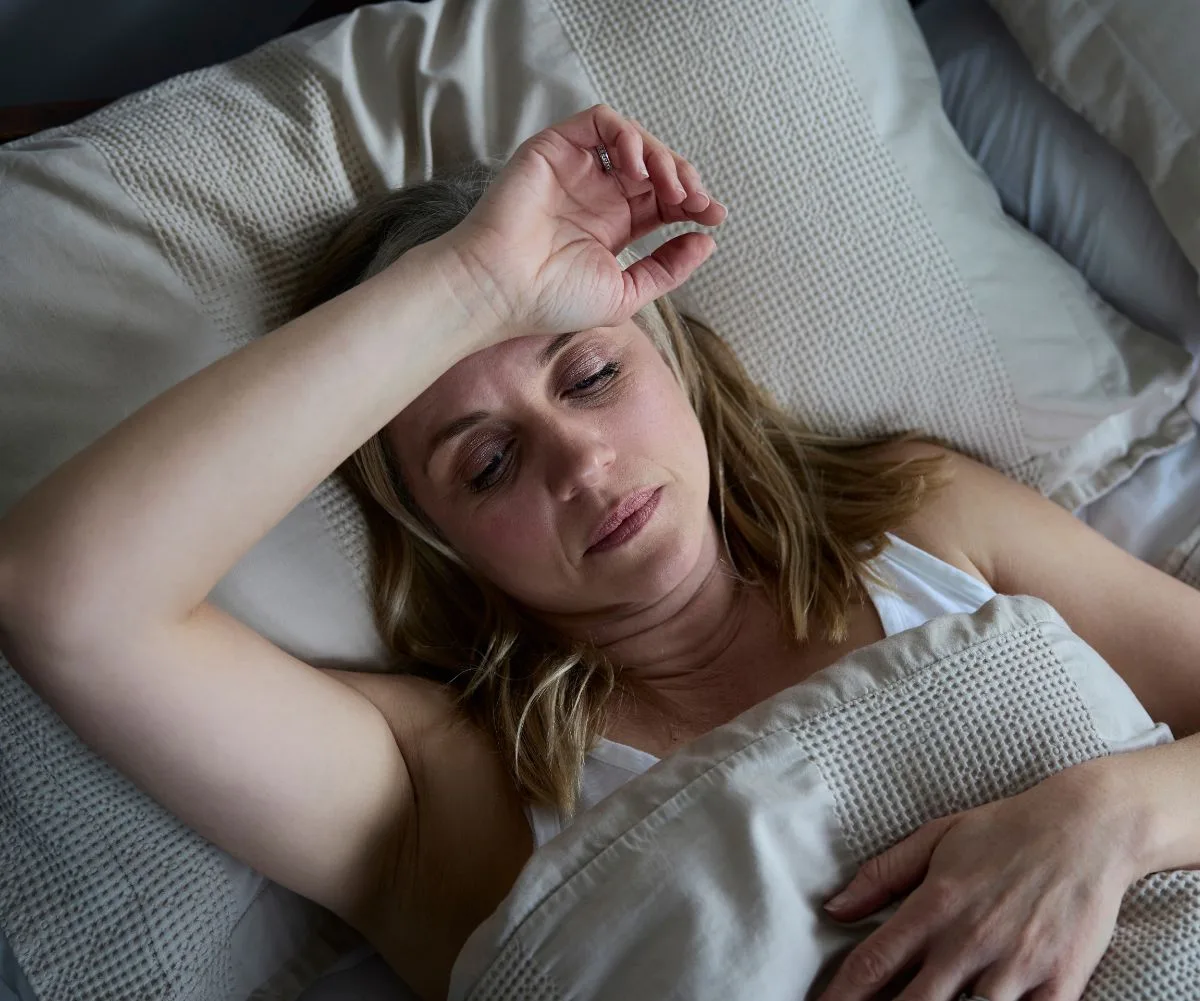
When the going gets tough, one of the first casualties is often our sleep. However, if you notice a clear difference as you enter perimenopause, your hormones could be the reason why you’re suddenly tossing and turning.
According to the Sleep Health Foundation, between 40 and 60 per cent of women experience significant sleep disturbances at this time of life.
“It is extremely common for women to struggle with sleep issues during perimenopause,” sleep physician Professor Pierre Escourrou from Withings says. “The fluctuations in oestrogen and progesterone directly impact the brain’s sleep-wake regulation, turning what used to be a natural process into a nightly struggle.”
What is happening?
Sleep issues are often one of the first symptoms women notice during perimenopause. GP Dr Joanna Bruce from Myma Health says these early sleep struggles are often caused by falling progesterone, which declines before oestrogen.
“Progesterone has a natural sedating effect and supports GABA, the brain’s calming neurotransmitter. As it drops early in perimenopause, sleep becomes lighter and more disrupted,” she explains.
“Even one or two nights of disrupted sleep measurably affects cognitive performance, mood and food choices. In perimenopause, where all these systems are already under hormonal pressure, sleep deprivation compounds everything.”
The 3am wakeup
Struggling to fall asleep is one thing, but waking up too early can be the problem that you didn’t see coming. Dr Bruce says there’s also a reason why these disturbances often seem to occur between 2am and 4am.
“This window corresponds to the body’s natural cortisol rise, which begins in the early hours to prepare for waking. In perimenopause this can be exaggerated – cortisol rises earlier and more sharply, pulling women out of deep sleep,” she explains.
“Low blood sugar (from not eating enough in the day, or eating too early) can also trigger a cortisol spike overnight.
“Anxiety, which is also common in perimenopause, tends to peak in that window when there are no daytime distractions.”

Hot & bothered
Night sweats are a hallmark symptom of perimenopause and Professor Escourrou says this occurs when dropping oestrogen impacts the part of the brain responsible for heat regulation. “Even a tiny increase in room temperature can trick the brain into thinking the body is overheating, triggering a massive skin flush with sweating to shed heat,” he explains.
This can be tricky on cold evenings when you need warm bedding but don’t want to wake up feeling like you’re in a sauna. Professor Escourrou says, “The key is moisture-wicking layers, like bamboo or silk, and opting for multiple thin blankets rather than one heavy duvet. This allows you to shed layers quickly during a flush without freezing the rest of the night.”

Getting out of sleep debt
It’s usually easy to catch up on sleep if you’ve missed a night or two. However, if you’ve been struggling to sleep for a while, you may need to take a closer look at any habits that you can address.
“When sleep disturbance becomes chronic, as is often the case during perimenopause, the focus shifts away from catch-up sleep and towards re-establishing a stable, regular sleep–wake rhythm,” Professor Escourrou says.
For some people, tracking their sleep could provide helpful clues for breaking the cycle. It’s always a good idea to talk to your doctor, who can talk you through potential treatments and recommend lifestyle changes.
“Treatment often involves Hormone Replacement Therapy (HRT) to stabilise these levels, but non-hormonal options and specific lifestyle adjustments are also highly effective for managing the body’s internal thermostat,” Professor Escourrou says.
Brought to you by Bio Island.
Proudly 100% Australian made and owned, Bio Island has been championing family health from pregnancy, infancy and beyond for close to two decades. We are committed to providing quality, evidence based nutritional solutions for every member of your family.

Related stories

Native ad body.

Native ad body.


Native ad body.