





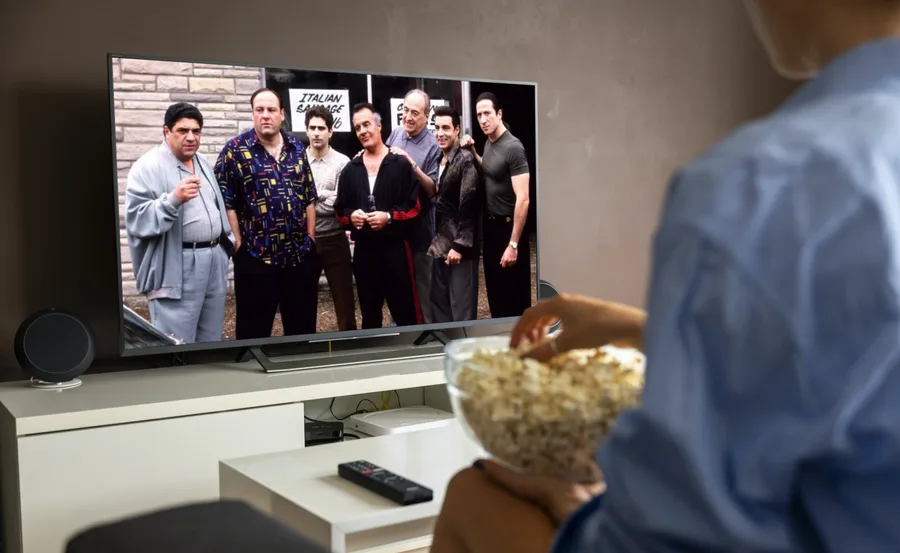
If you ever want to create a ruckus in the TV WEEK office, there’s one topic that causes a lively debate: whether streaming shows be released weekly or drop all at once.
You see, before streaming services became a very normal weekly expense, television was a collective experience for a household. Each week, you’d scan the TV guide for when new episodes of shows like E.R. or The Sopranos made were on, tell your friends not to call the home phone during that time and get comfy on the couch. The next day, the episode would become watercooler conversation throughout offices everywhere, rather than discourse exploding instantly online.


These days, it’s different. We have the world of television at our fingertips through streaming. There is so much to watch at all times that when TV shows actually do break through into online conversation, it’s a big win. With the competition for eyeballs higher than ever and attention spans dwindling, streaming services had to react by releasing full seasons of shows at once.
This is where the TV WEEK team is divided. For some, the community-building week by week viewing is an important part of the TV experience. For others it’s much nicer to get snuggled up on the couch and smash out a series all in one go. But if you ask the minds behind the streaming services themselves, the difference in episode distribution isn’t just about preference.
According to Ben Nguyen, Stan’s Director of Programming, there are pros and cons which dictate why a show is released weekly or dropped all at once.
Let’s get into it.
Why do streaming services release shows all at once for the binge-watch?
While you might think it was streaming services that kicked off the beloved modern-day binge watch, Ben says it all began with the humble DVD boxset explosion of the early 2000s.
“Unless your TV show was shown as repeats or you had recorded it from the TV, that was it! But then you could suddenly buy a complete season of your favourite show and binge watch it whenever you wanted. This coincided with the rise of prestige TV series like Breaking Bad and Mad Men. Netflix started as a DVD mail order service, so when they launched their online platform they initially released older TV shows all at once.
“Then, when they started making new shows in the 2010s, it made sense to release them in the same way. Other streamers started following the trend.”


For a streamer, there are positives about releasing every single episode in one drop, including creating a cosy, immersive viewer experience.
“You can pull the curtains closed, settle in on the couch, put your phone on silent. And when it’s a really gripping series, before you know it you’ve binged through three episodes or more!” Ben explains.
“It can be a really pleasurable experience to devour a series over a short space of time, and it can be great for storytellers as well, because you can drop little hints in one episode that pay off later in the season and the audience will get it!”
In some cases, the decision relies on the content of the show itself. Is it asking audiences to go to an emotionally taxing place to watch this show? Or maybe the series is complicated and requires the audience to stay focused, rather than forget information week to week.
“For a Stan Original series like Dear Life, you’re asking an audience to go to a really emotional place with the characters, so it made sense to release all episodes at once,” Ben continued.
“And for the upcoming Stan Original series The Killings at Parrish Station, there’s a complex mystery that’s jumping between two different timelines, so again it makes sense that we would release that all at once so that audiences can really immerse themselves in the storyline.”
Conversely, with so much content available online at any time, Ben says it can be hard to keep audiences talking about a show when you’ve given all the episodes up at once.
“Sometimes the cultural moment that you’re trying to create around your show can move on quicker than you’d hoped,” he admits. “It can be harder to maintain the watercooler conversation around a show when there are no new episodes dropping, or if people are at different stages of watching a show and don’t want to be spoiled.
Why do streaming services release shows week-to-week?
A week-to-week release schedule is a classic for a reason — and Ben says this is because “so much TV viewing is based around habit”.
“It can be nice to have a weekly show that is appointment viewing and gives people comfort because they can spend time with characters they love every week,” he says.
For some shows, releasing weekly episodes is the best way to keep the audience talking — but only if you know the show is going to be a hit.
“You really need to have faith in your show. A week can be a long time, especially with other shows launching. You need to be confident that audiences are going to want to come back one week later,” Ben shares.
“Ideally you can create that cultural capital around your show for longer and amplify the desire that people have for shared experiences,” he continued.
“It works perfectly for reality shows, we’ve seen that recently with the Stan Original Married at First Sight: After the Dinner Party.
“That was helped by the amount of discourse and commentary that already exists around MAFS, so you’re tapping into something that’s already in the zeitgeist.”


“It also works when you’re trying to build that cultural capital yourself [with a new show] or work for drama too, especially where the stakes are very high and fans want to unpack what is happening on a show,” Ben continues.
“We see it with From where the internet is filled with fans looking for clues and sharing theories on where the show is going. We also found that with the last season of Stan Original series Black Snow which we released weekly and it worked really well.”
What about international shows?
Admittedly, Aussie streamers can’t always control the roll-out of every show — especially if its an international series.
“We want to fast track it to Australian audiences. That means that if it is a weekly rollout in the US, we will release weekly and if it is a binge release we will drop all at once,” Ben explains.
“Generally US networks and cable channels are still committed to weekly releases to fill their schedules. But even streamers can take different approaches. Peacock in the US, for example, will release some series weekly, some all at once, and some staggered with two to three episodes a week.
“When we produce a Stan Original we have more control over the release, and so it is a case-by-case decision of what is best for the audience and what is best for the series.”
Well, there you have it.
While the TV WEEK team is still firmly split between “one episode a week is sacred” and “accidentally watched the whole season at 2am”, at least now we know there’s method behind the madness.

Related stories

Native ad body.

Native ad body.




Native ad body.