



Ben Markham shares his story of rescuing a trapped whale in Eden with Take 5…
Packing our gear into the boat, I turned to my colleague Andy.
“Reckon we chuck in the hooks and cutting poles?” I asked.
He shrugged.
“We may as well,” he said.
Andy and I work for the Sea World Foundation on the Gold Coast and we were getting ready for a trip down to southern NSW. There, we were going to meet up with a crew of whale researchers.
Read more: I collided with a whale while surfing!
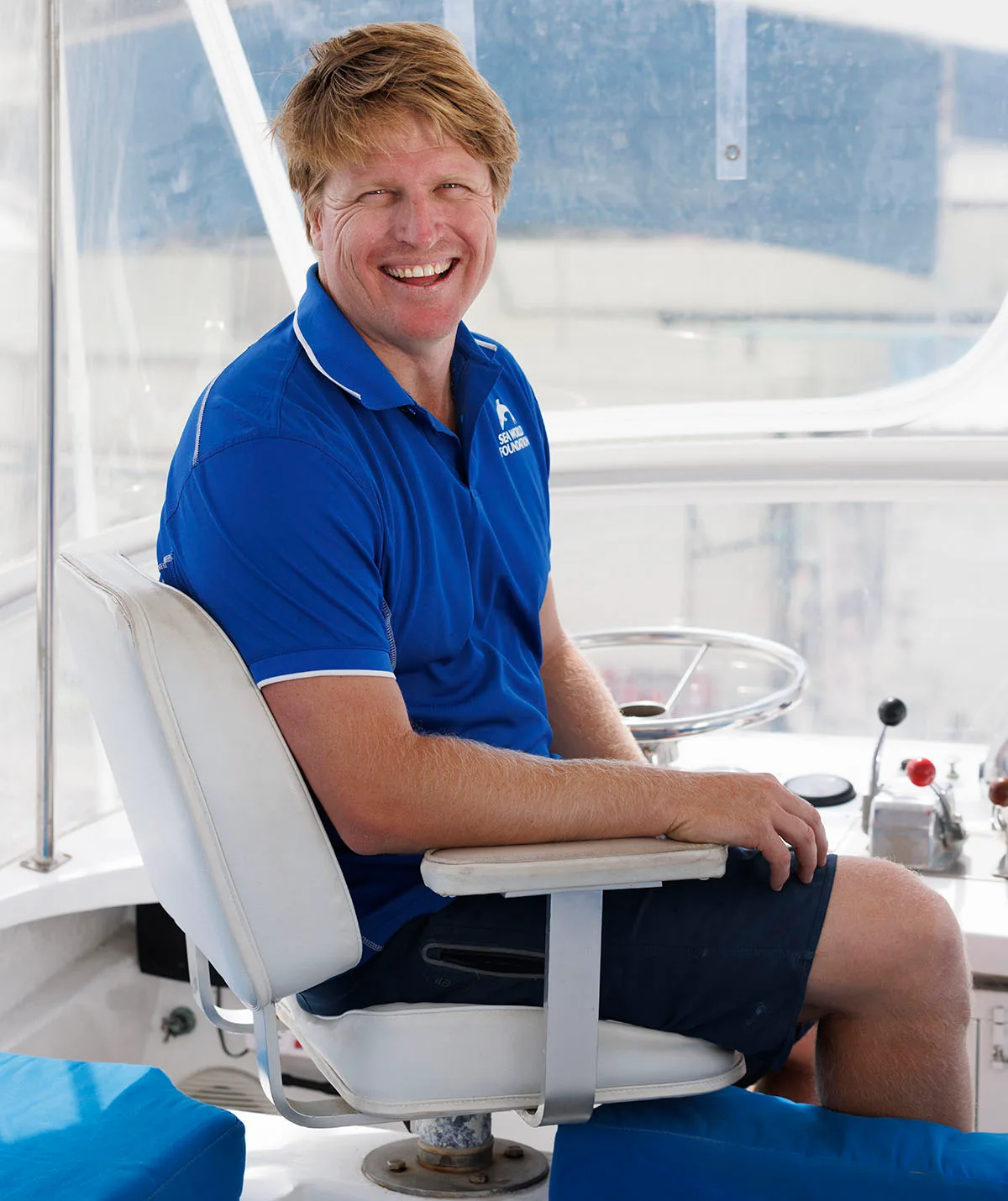
I’m a marine mammal specialist and Andy is a Sea World skipper.
The next day, in August 2023, Andy and I, along with our Sea World marketing specialist Mitchell, headed off to Eden.
One morning, we managed to attach a satellite tag with a camera on it to a humpback whale. The tag is attached with a suction cap which causes no pain. After a couple of hours, it usually falls off.
But on this particular day, it didn’t. The tag stayed on and we followed the whale and its pod all afternoon. It was beautiful.
The next morning, we all woke up early.
“The tag has come off,” one of the researchers said, looking at the app on his phone.
Now we needed to grab the tag so the researchers could get the data off it.
We hopped in the car and towed our boat two hours south following the tag’s GPS.
Near Disaster Bay, we launched the boat.
As we got closer to where the tag was, around 16km off the coast, we could see a yellow buoy.
“What’s that doing there?” I asked.
Then we saw a whale blow right near it.
Reaching the buoy, we realised the whale was entangled in the buoy’s ropes and chains.
Remarkably, two other whales were taking it in turns to lift the entangled whale up to the surface so it could breathe.
By some bizarre coincidence, the tag was just 50m away. It had brought us right up to this distressed whale.
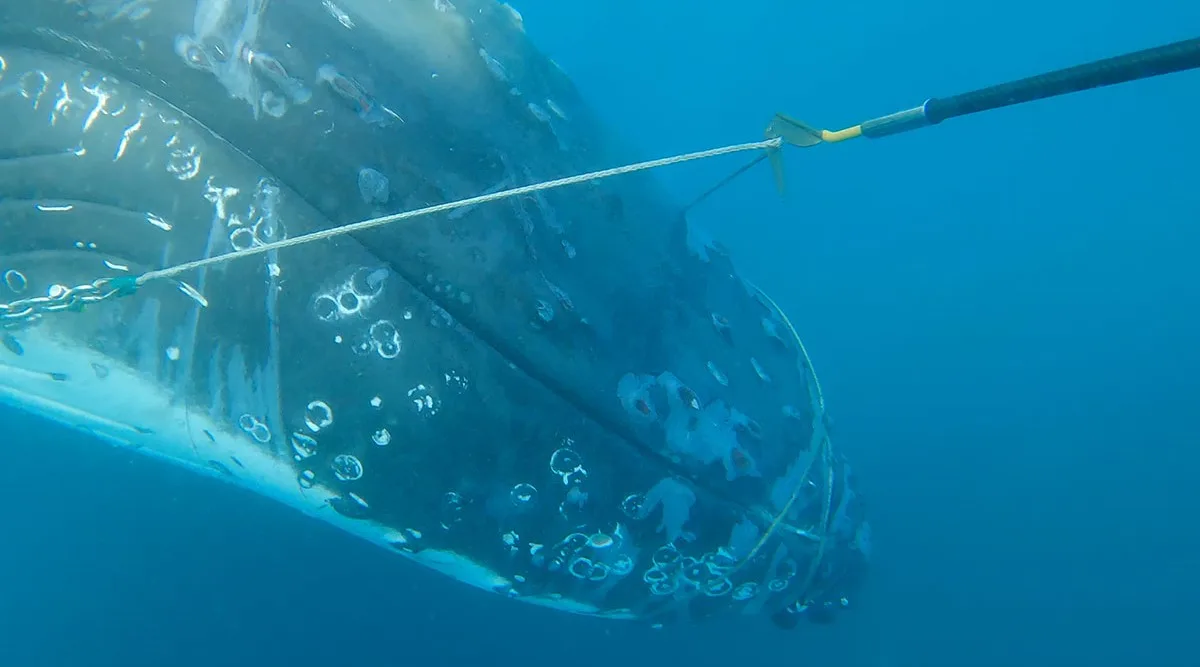
We retrieved the tag and then Mitch put his GoPro on a stick into the water.
“Let’s see what’s happening,” he said.
The whale had lost quite a bit of skin and it was bruised and bleeding.
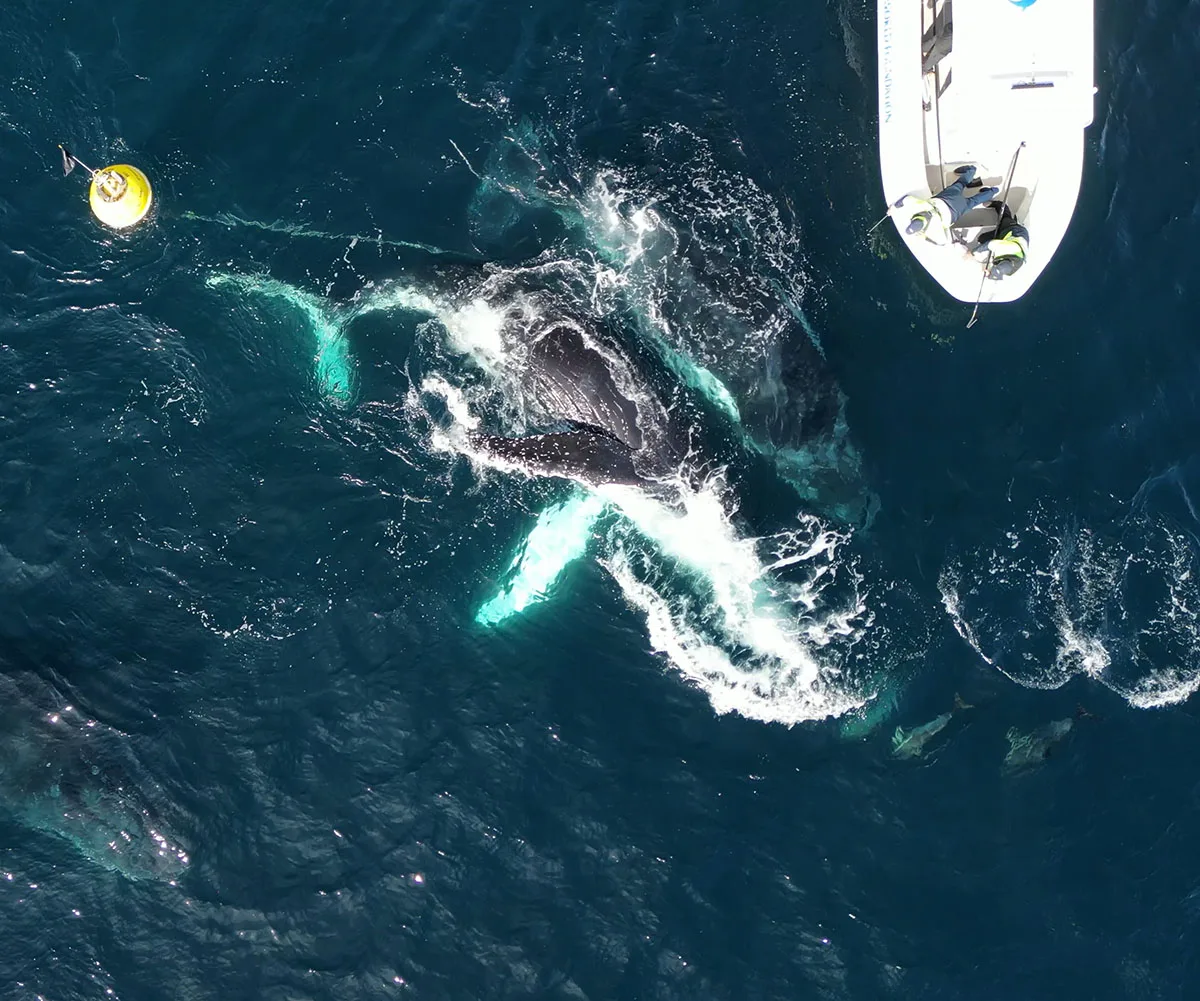
“Looks like it was entangled for a while,” I said. “It probably dragged the buoy from way up the coast. Let’s free it.”
I took the cutting pole and a hook and went right up to the front of the boat.
Andy then drove the boat as close as he could while Mitch kept the GoPro in the water to help guide me.
“Right mate, the first rope to cut is that one near its flipper,” he said.
I leant over and managed to snip it free.
The trick was not to disentangle the whale too quickly or it would swim off with some of the rope and chain still attached.
By now, the other whales had all swum away.
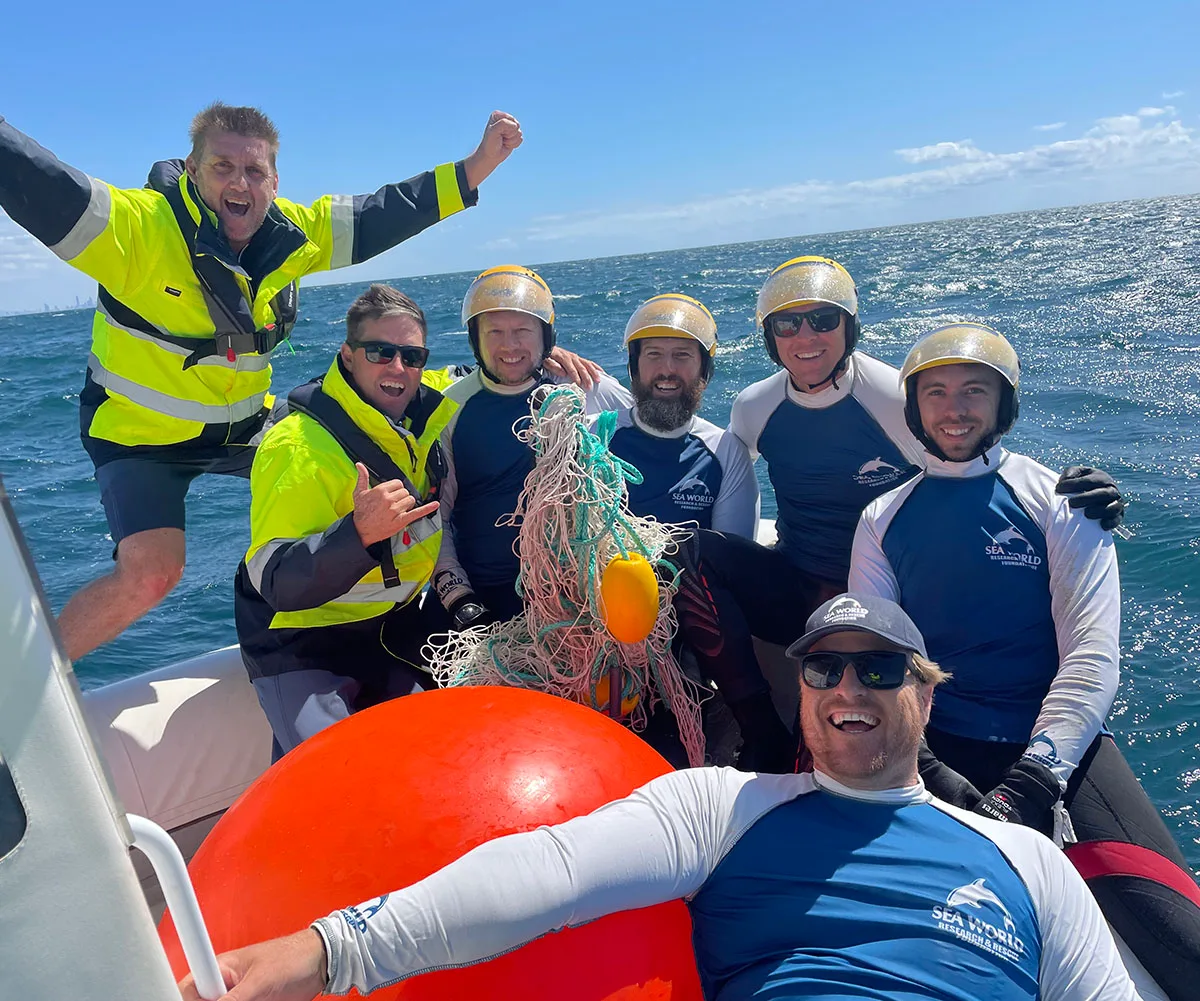
Mitch guided me to make three more strategic cuts.
Cutting the last bit of rope from around the whale’s mouth, he was freed and swam off while everyone cheered.
The whole rescue took just 15 minutes.
The research team with us filmed it all from above using a drone.
“Did that really just happen?” I asked, as Andy drove us back to shore.
It all felt like a dream.
The whale was heading off to Antarctica. We would’ve been the last chance it had to be rescued.
The fact the tag took us right to it, and that we had our cutting gear on board, all felt like fate.
Normally, rescues like that take a team of seven but the three of us managed it.
Our boss back on the Gold Coast was thrilled with what we’d done and the rescue was beamed on TV stations all around the world.
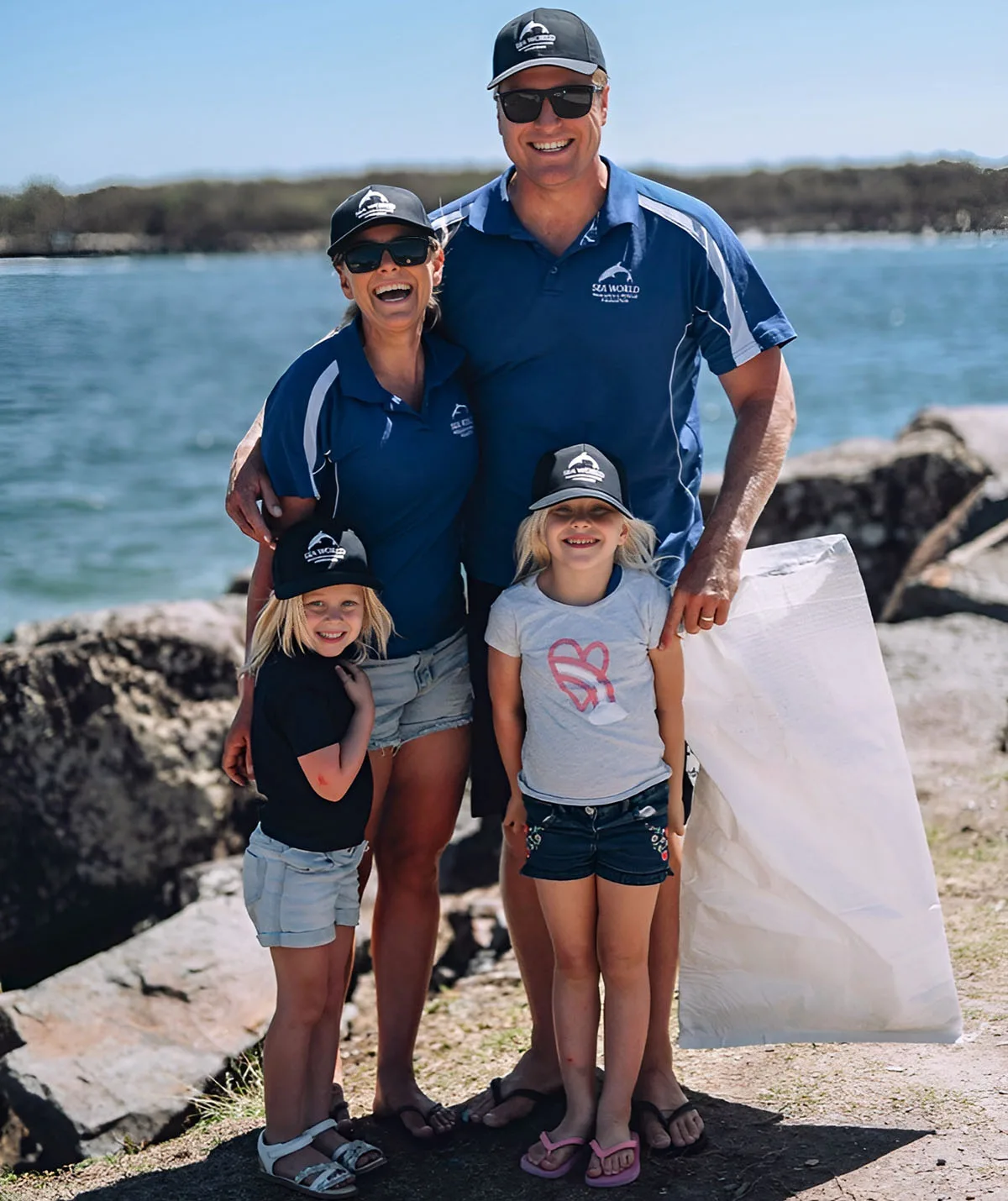
I couldn’t wait to tell my wife Christina, who also works for Sea World, and our daughters Occi, nine, Aspen, seven, and Layki, two.
“Thank you for helping the whale, Daddy,” Aspen said.
It was a pretty special day. One I’ll never forget.

Related stories
Native ad body.
Native ad body.

Native ad body.