






We think of grief as something that happens when someone we love dies, but any kind of loss can trigger a process of grieving.
Sydney-based counsellor Kerry McCarthy explains.
As the founder of Working Well Counselling in Sydney, Kerry McCarthy is a counsellor and psychotherapist who specialises in supporting women as they navigate challenges and life transitions. Her expertise covers everything from parenting and relationship problems to career shifts and health issues.
Kerry provides practical, supportive strategies to help make the hard times we all face feel a little easier. Find Kerry at workingwellcounselling.com
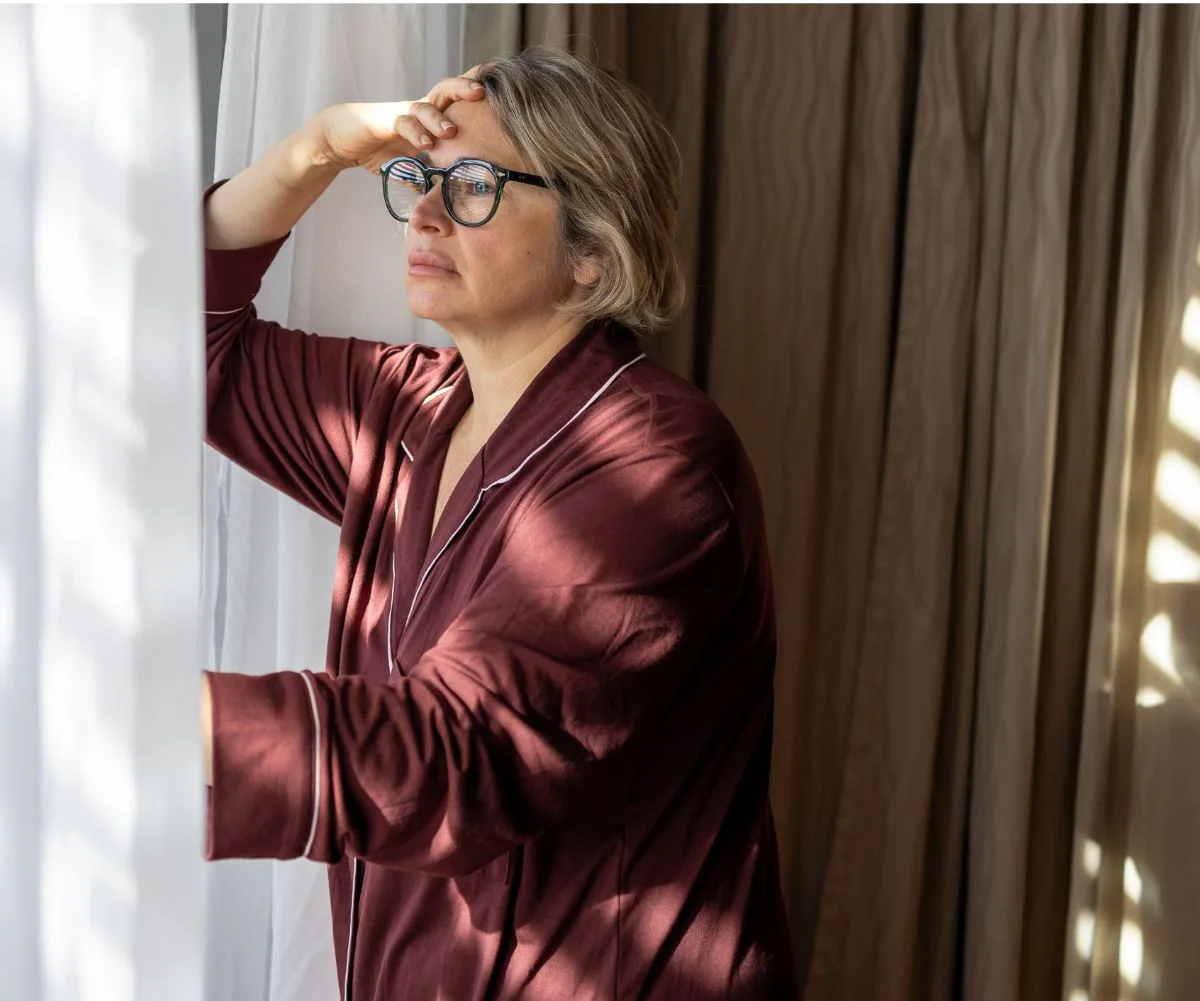
Find the support you need when navigating through any kind of loss.
When someone we love passes away, the pain we express, known as grief, is expected. If we find ourselves crying in the supermarket
or losing our temper over something trivial, people will say it’s all “part of the grieving process”. Simply put, we are allowed and even encouraged to feel and show how we feel.
But what about other kinds of loss? The end of a marriage or career. The deafening and lonely silence after the kids finally move out. The knowledge that
a life you imagined, the dreams you once had, are over. Understanding that grief can be caused by many different things gives us the permission to process loss in our own, unique way.
What is grief?
Typically associated with death, grief is the emotional and physical response we have to a significant loss.
All cultures have ceremonies, traditions and specific periods of time when following the loss of a loved one, people are allowed to show sadness. Funerals are just one example of a set time and place where we can grieve and show our pain in a socially acceptable way.
Grief has been explained as specific stages we have to move through to “heal”. Denial, anger, bargaining, depression and finally acceptance have been labelled the “Five stages of grief”. But in reality, grief is a very different experience for everyone and can be caused by things other than death.

Complicated grief
When her adult daughter moved to the UK for work, Jacqui, 62, from Sydney, was devastated. “I’ve always been close to my daughter and when she had her two babies I was a very hands-on granny,” says Jacqui. “When they all left, I felt like I’d lost a limb. I was in physical pain every day and was shocked at how unwell I felt. I would stare at the computer screen for hours waiting for an email, even when I knew they were all asleep. My husband just didn’t understand it and said, ‘It’s not like they’re dead!’ No one understood and I felt like the pain I was feeling wasn’t allowed.”
When we experience a type of loss that society doesn’t recognise, we can have what is called disenfranchised grief. When our grief isn’t acknowledged and is even denied by others, this can make the feelings of loss even worse. We can be completely alone and isolated in our sadness, unable to express how we feel or even begin to process it.
“No one seemed to understand what I was feeling,” admits Jacqui. “Everyone kept saying what a great opportunity it was for them all and how we could visit for lovely holidays. But I just wanted to scream at them. It was the most alone I’ve ever felt.”
Different types of loss
A sense of grief can come from many different sources, even things that ironically also make us happy. Retiring from a demanding job can be a relief and a chance at a new chapter. But we can also mourn the loss of work friendships, a sense of purpose and our daily routine.
It’s also not just the loss of a job or relationship that can trigger grief. When a marriage ends, the life you thought you’d have in the future no longer looks the same. Saying goodbye to hopes and dreams can be incredibly difficult.
There are practical losses as well. After a divorce, people you once spent time with as a couple may now have to choose between you and your ex-partner. Close friends can become distant as people move on. There is a loneliness attached to that kind of loss that is hard to describe or move on from.

Dealing with grief
Your GP is also a great resource, and they can recommend a counsellor or other health professional who may be able to help. After weeks of suffering, Jacqui spoke to her doctor who explained that grief was normal and it might help to talk to someone. “I saw a counsellor for about six weeks who gave me the space to cry and work things through a bit. Having my sadness recognised by someone else made me feel less alone.”
Get more support and online resources at Grief Australia grief.org.au, and for online counselling nationally, go to workingwellcounselling.com
Recognise your sadness This means giving yourself permission to grieve and acknowledge what has been lost.
Don’t apologise Grief is a unique experience for each person, and you are allowed to have your feelings.
Practise self-care Sleep, eating well and exercise won’t make the grief go away, but it will help keep you healthy.
Find your people Lean on the friends and family who understand and don’t dismiss your grief as something trivial.
Get support Consider reaching out to local or online groups for people in similar situations.
Life 3.0: Your Next Chapter Lived Beautifully by Janine Donovan

When Grief Finally Arrived
After months of preparing the house for sale, the hard part wasn’t watching the “For Sale” sign go up. It was what came afterwards.
For so long, I’d been too busy to hear myself think, but once the house was sold and all that hustle
had come to a halt, the silence arrived. And with it came something I hadn’t expected.
I think, if I’m honest, that’s when I truly began to grieve.
People often equate grief with the losses we didn’t choose, but I’ve learned that’s not always the case. Even when you’re making the decision, even when you’re moving towards a life you genuinely want, you still mourn what you’re leaving behind.
I wasn’t grieving my choices. Although there were certainly times that I still questioned them, I was grieving a chapter that had shaped me. I was grieving
a partnership that, to this day, I still value and am eternally grateful for. I was grieving the beautiful family life we’d built within those walls. Most of all,
I was saying goodbye to the woman I had been.
The Only Way Through
Nobody prepares you for that part. We spend so much time talking about courage and making brave decisions in life, but not enough time reflecting on what comes after them.
Loss is loss… however it appears in your life. We instinctively make space for grief when someone we love dies, but we rarely extend ourselves that
same compassion during life’s quieter transitions. Watching our children grow up and need us differently, the end of a relationship, leaving a career or a home we’ve loved. Even the gradual changes that come with midlife can carry their own sense of loss.
We often tell ourselves we should simply be grateful, excited or looking ahead. But two things can be true at once. We can be deeply thankful for what’s coming while still mourning what’s been left behind.
Reflecting now, I can see that the space between 2.0 and 3.0 wasn’t empty after all, although it very much felt that way at the time. It was where I slowly let go of the life I’d lived, and learned to embrace the uncertainty of what lay ahead. It felt both scary and exhilarating, but beneath it all was a very real sense of grief.
Perhaps that’s what grief is really asking of us – not to hold on to the past, but to honour it before we embrace whatever comes next.
Follow along on Instagram @womansdayaus

Related stories

Native ad body.

Native ad body.




Native ad body.