




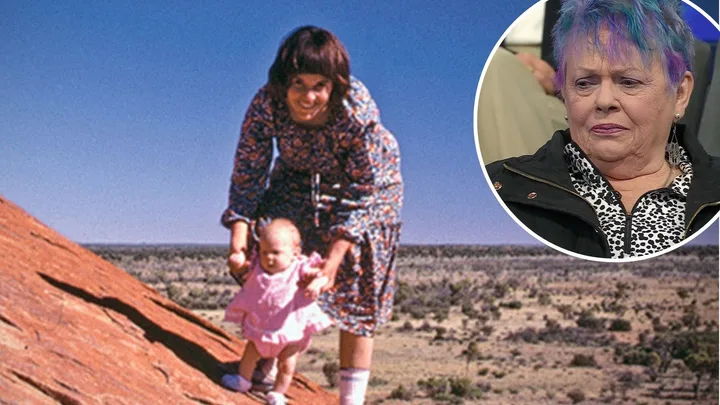
Azaria Chamberlain would have celebrated her 46th birthday in June. And while her mum Lindy tries not to think “what-if”, she can’t help but sometimes imagine what her daughter’s life – cut short at just nine weeks – would look like if she were alive today.
“Every now and then I will see someone her age and think she would have been that age, I wonder what sort of life she would have,” admits Lindy in an exclusive interview with Woman’s Day.
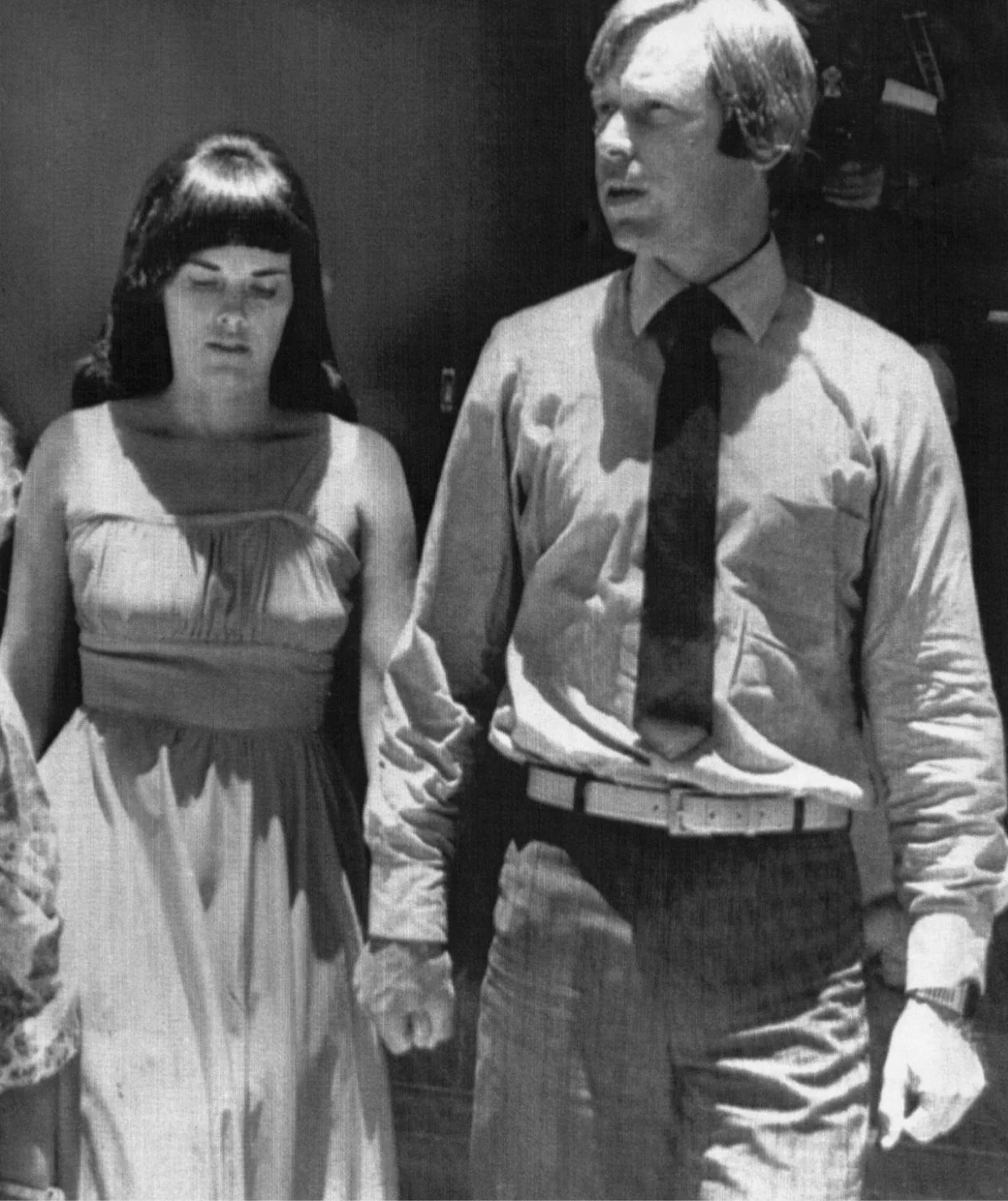
“I don’t tend to look backwards all the time. I don’t visit graves. If you keep looking backwards, all you do is make yourself sad and miserable. What is the point of the what-ifs? People drive themselves crazy over the what-ifs?”
Still Lindy, now 78, can’t help but wonder what could have been if nine-week-old Azaria hadn’t vanished from the tent she was sleeping in with her then four-year-old big brother Reagan.
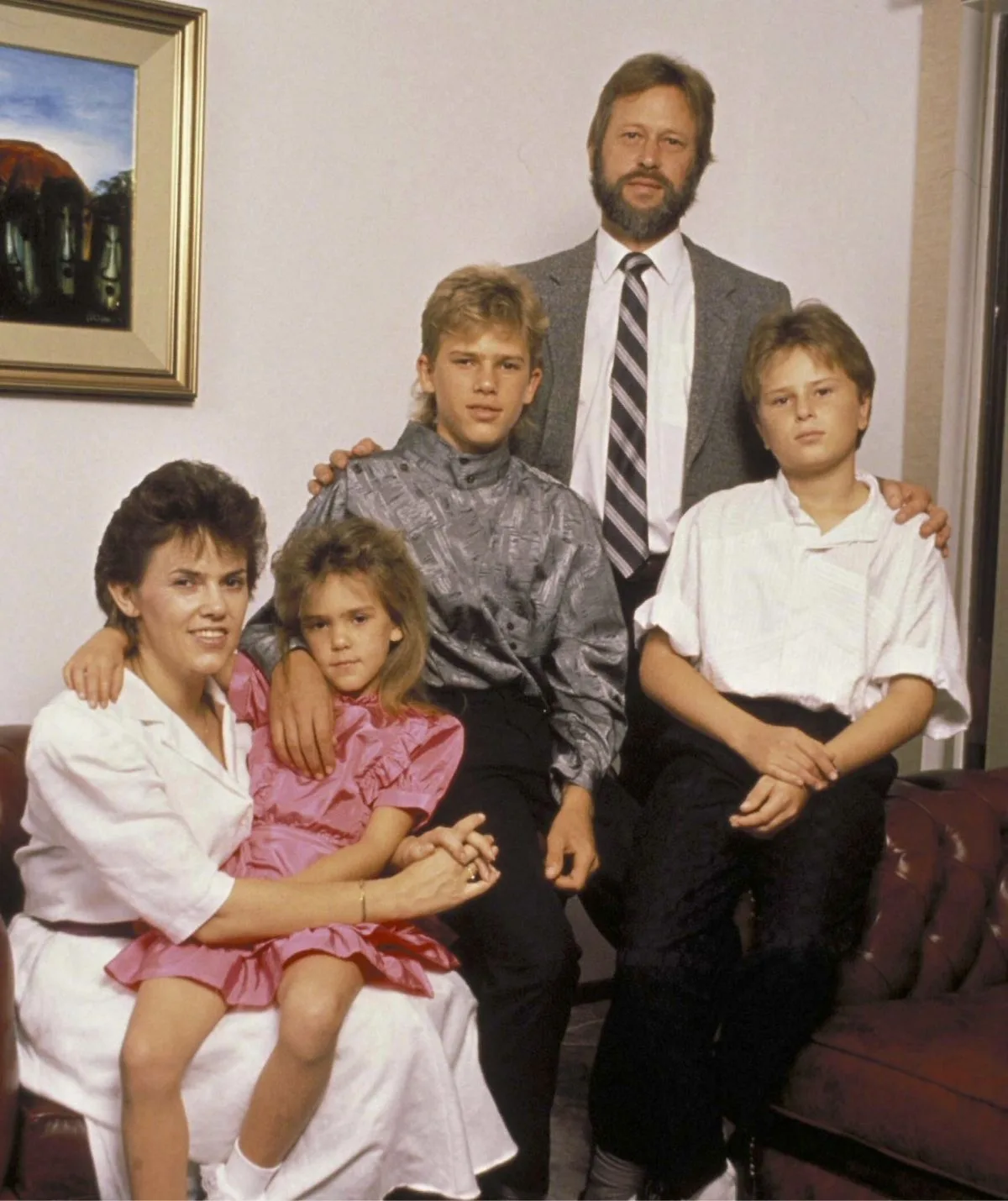
That terrible night on August 17, 1980, led to untold heartache and anguish for Lindy and Michael Chamberlain and their two surviving children, Reagan and his older brother Aidan, who was just seven years old at the time.
WRONGLY CONVICTED
Their daughter Kahlia, 43, was born in Darwin Hospital 19 days after Lindy was wrongly convicted and jailed. Lindy was given just one hour to spend with her baby, who was then raised by foster parents.
The trauma of being wrongly accused affected the entire family. Aidan and Reagan were savagely bullied at school, and Michael, a Seventh Day Adventist pastor, was vilified after his conviction for being an accessory after the fact.
Lindy has been fighting ever since to ensure that no other families experience a similar miscarriage of justice, recently reigniting her campaign to reform the judicial system that stole part of her life.
“Not many people know that I served twice on a jury before all this happened to me,” reveals Lindy, who says in one of those cases she and the other jurors acquitted a man she thought could have been guilty.
That jury requested separating the convictions for the two defendants, but were told they couldn’t – only to find out later that the request for a directive from the judge was never presented to him in what she insists was a clear case of “jury tampering”.
“We erred on the side of ‘better to keep an innocent person out of prison than put an innocent one in’, and we let them both off,” she says.
The irony does not escape Lindy, who was found guilty of murdering Azaria in 1982 and jailed, before her conviction was overturned in 1986 after Azaria’s bloody matinee jacket was found adjacent to a dingo lair at Uluru.
She has since become friends with one of the jurors who helped wrongly convict her, Yvonne Cain, who famously rang a radio station to confess that she thought the jury had made a mistake before Lindy was freed.
Lindy later found out that Yvonne was one of the “holdouts right to the end” who didn’t want to convict her, and found it easy to forgive “having been inside a jury and having seen the pressure that can be put on somebody who is holding out”.
Lindy now even speaks to new recruits at the Australian Federal Police to warn how miscarriages of justice can happen to the innocent and highlight her campaign to have forensic evidence reviewed by a panel of experts before it’s presented in court.
“There’s a whole bunch of lawyers and judges who believe exactly the same thing and are trying to work out how they can get the system changed,” she says.
“Forensic scientists themselves are really worried about how to get their evidence across to a jury, so the jury can understand, and so they are even given classes in how to get it across to people who don’t know what they are talking about.
“I have thought about it for years. We have our own opinions and biases. People can be corrupted, they can be bribed, [so] what’s the best way to alleviate as much of that as you can?”
PANEL OF EXPERTS
Lindy points out so many accomplished people, including doctors, nurses, lawyers, professors and police officers are excluded or can exempt themselves from juries.
As a result, she says, they are made up of people who don’t have the knowledge to understand complex forensic information.
“People’s eyes glaze over. Our lawyers took three or four days of intensive courses from scientists to understand the blood evidence, let alone all the other types.”
Lindy’s solution is to create a panel of experts who can evaluate evidence before it is presented to a jury to ensure it stacks up and won’t simply confuse them.
“I think juries serve a useful function,” she says, explaining that she is opposed to only having judges decide cases, alleging the judge in her case “went to sleep on the bench”.
It would be easy to be consumed with bitterness, but instead Lindy fought to clear her name. It took 32 years, a royal commission and four inquests before a coroner made a final ruling that a dingo took Azaria, with Lindy and Michael awarded a then-record $1.3 million in compensation for her wrongful conviction.
Lindy says research shows three in 10 Aussies still believe she’s guilty. Some even think Azaria’s still alive. Two years ago a stranger contacted her claiming Azaria was kidnapped.
“You get weird ones like that,” she says. “But then you get nasty ones, which Rick mostly ignores. I still have people telling me they’re Azaria and they want to have DNA blood tests to prove it.”
Rick Creighton is the businessman Lindy found love with after she and Michael – who died of leukaemia in 2017 aged 72 – divorced in 1991.
They live on the Sunshine Coast hinterland where electrician Aidan, 53, and his wife Amber are raising their two daughters, not far from where Reagan, a community care worker, also now lives. Kahlia, 43, lives in the Virgin Islands.
FINDING HAPPINESS
“People ask Kahlia what it’s like being a Chamberlain,” Lindy says, explaining that she responds by pointing out that she’s “never known it any different”, whereas it was “different” for Aidan and Reagan.
Lindy “loves” being a grandmother and wishes she hadn’t missed so many of her own kids’ big milestones during the three years she was in jail. “It’s good to see the littlies regularly – that is nice,” she says.
She says laughter is a great medicine, but it’s her faith in God and support from loved ones and her community that has helped her heal and find happiness.
“Why did God let it happen? We’re humans. He gave us choice. We let it happen. People cause the problems and evil causes the problem. God does not. He helps you get through it.”
BECOMING FRIENDS
Yvonne, 77, hoped for a “divine moment” that never came as she sat for seven weeks on the jury that ultimately found Lindy Chamberlain guilty.
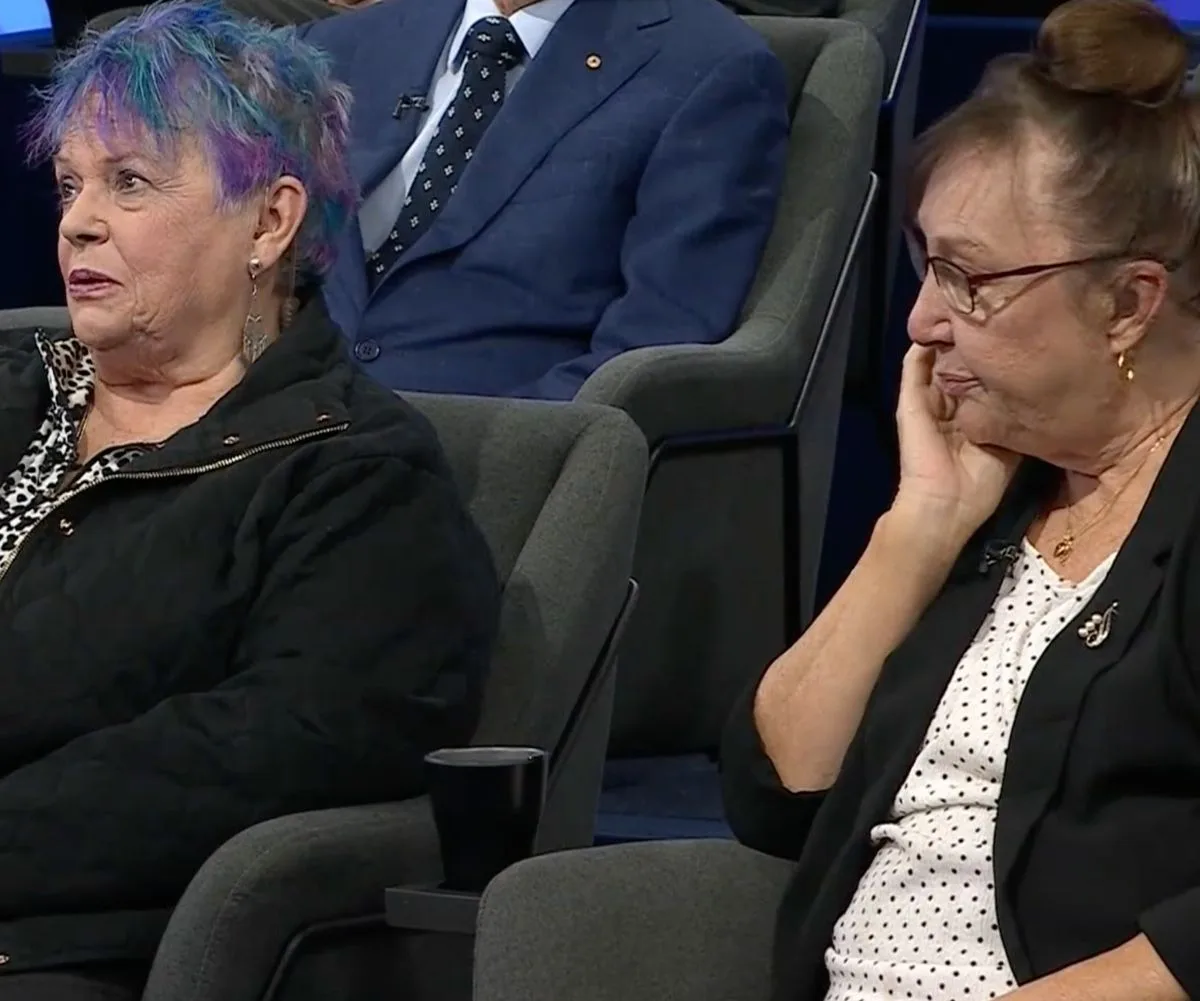
But then just weeks before Lindy was finally freed from prison, Yvonne, summoned up the courage to phone a local radio station and admit she felt she’d made a mistake and Lindy was innocent.
It eventually led to the two women reuniting a short time after Lindy was released from prison.
“I didn’t even recognise her because she was just skin and bone,” recalls Yvonne, who famously broke down in tears in court when Lindy was sentenced all those years ago.
“She said she forgave me straight away. I would not have been surprised is she gave me a barrage of abuse. I was expecting her to swear at me, but she didn’t. She was lovely, and we became friends.”
Lindy says she never blamed Yvonne or the other 11 jurors for her wrongful conviction, and admired Yvonne’s courage in coming forward to admit she felt there had been a miscarriage of justice even before new evidence proved it.
“People gave her a hell of a time for speaking up,” Lindy says.
Yvonne says in hindsight she probably felt Lindy was guilty even before the trial began because, like many other Australians, she’d followed the investigation and read many damning reports about it.
“On that first day in court everyone was so shocked because Lindy was almost nine months pregnant.”
“I remember waiting for that divine moment to say no she didn’t do it – and it just didn’t seem to come,” she says
Lindy Chamberlain and Yvonne Cain both recently appeared on SBS Insight’s Beyond Reasonable Doubt, which brought together a panel of experts to examine the jury system in Australia. It is available to stream on SBS On Demand

Related stories
Native ad body.
Native ad body.
Native ad body.