




The racquet was just how I remembered it – wooden and slightly battered – but it was 20 times the size. When I first saw the 13.8-metre-long statue, which was a scale replica of my signature Dunlop racquet, I was lost for words. The monument reflected the enormity of what I had achieved in my tennis career. It was huge!
The Big Tennis Racquet had been erected in Evonne Goolagong Park on the main street of Barellan, and it was unveiled during the town’s centenary celebrations. I travelled to Barellan in the spring of 2009 for the opening ceremony of the statue, and to be back in my home town for such a special occasion was heartwarming.
During my career, tennis was an individual pursuit. I competed for myself and excelled for myself. It was only in the years after retiring that I realised how my accomplishments had a ripple effect for other players. As I walked the sometimes-lonely road of being the only Aboriginal player in a tournament, I was unknowingly paving the way for the next generation of Aboriginal players.
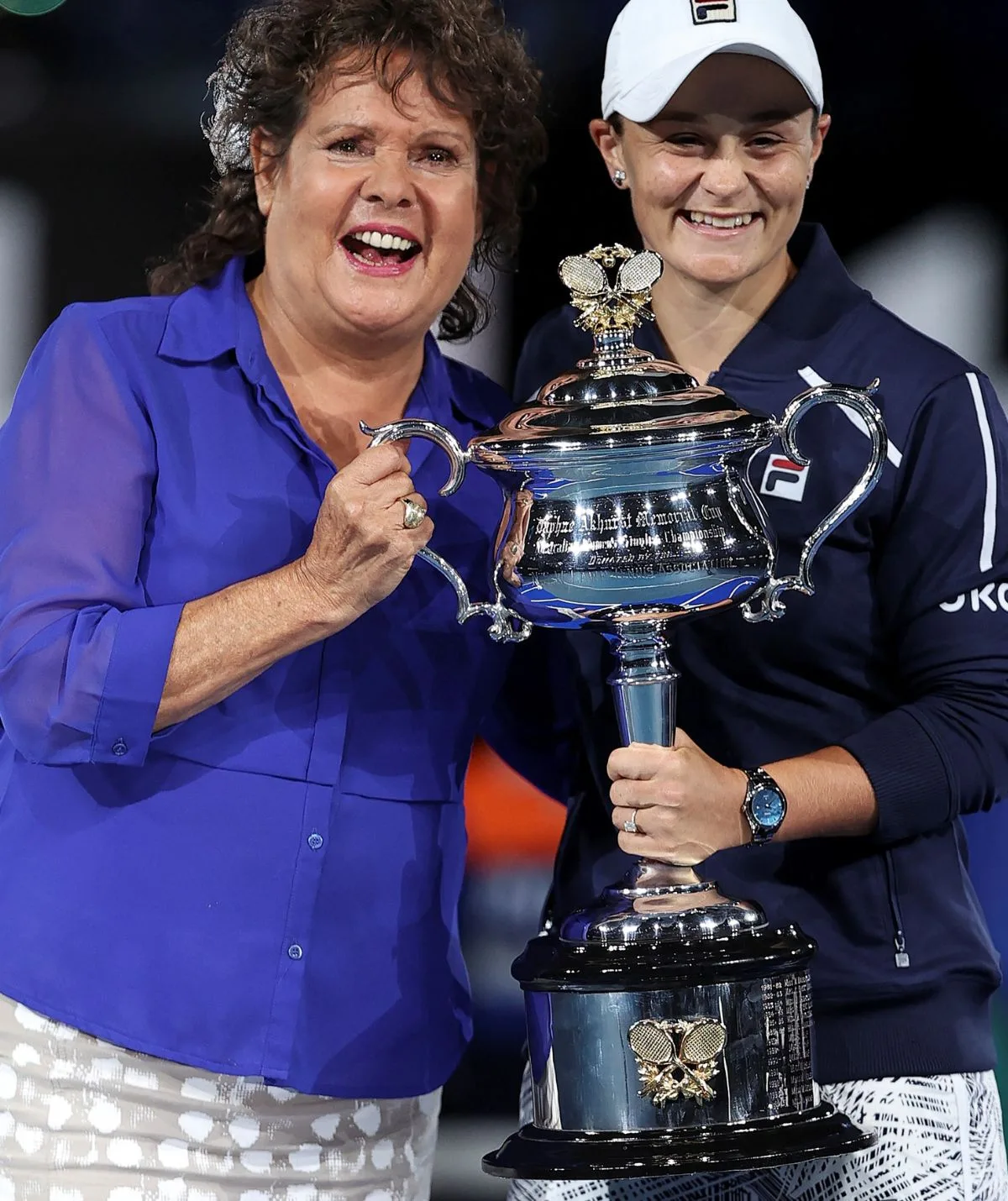
Meeting Ash Barty
In 2011, I saw one such player in action for the first time at the Australian Open Junior Championships in Melbourne. She was a 14-year-old Ngarigo girl from Ipswich in Queensland. Her name was Ashleigh Barty. The Junior Australian Open was her first junior grand slam, and she was up against the third seed, 17-year-old American Lauren Davis, in her opening match.
Three minutes into the game, I knew Ash was something special. I immediately understood her way of playing. She’s got it, I thought to myself. She’s going to be No.1.
Ash could do everything – absolutely everything. She had the power and the brains, and she knew how to use the court. Ash lost her match against the American, but that didn’t dim my excitement in the least.
After the match, Roger and I met with Ash’s father, Robert, and her coach, and we told them how terrific we thought she was. “Oh, she’s suffering a bit with the loss,” the coach explained.
“Well, she shouldn’t do that,” Roger said, matter-of-factly.
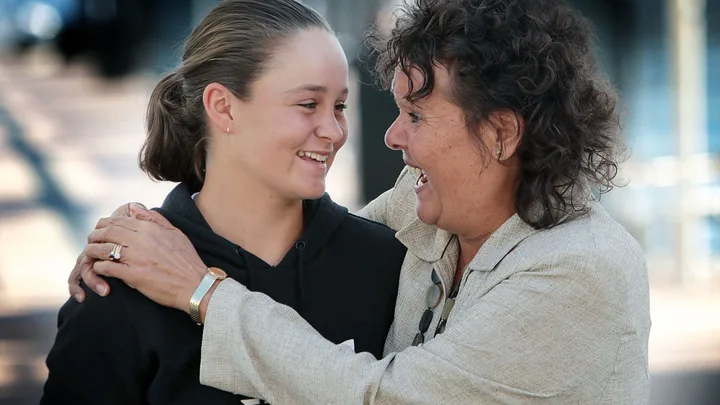
When Robert introduced me to Ash, I gave her a big hug and told her I loved the way she played. It was our first encounter, but I knew it wouldn’t be our last.
Ash and I stayed in touch, and she reached out to me whenever she needed support. I happily stepped into the role of her mentor, but I didn’t ever push her or offer advice unless I was asked to. I firmly believed that Ash knew what she was doing and what she had to do to make it to the top, just like I had when I was her age.
Later, Ash opened up about our friendship to The Australian Women’s Weekly. “She is only ever a phone call away,” Ash said. “She’s been through the same phases and feelings that I’m going through, and I know if I need that shoulder to lean on, she is always there.”
I was there in 2014 when Ash called. She was deep in the pits of burnout, a place I knew well. Ash was only 18, but she was cracking under the pressure of professional tennis. She asked me what I thought she should do, and I answered her honestly. “Take a break,” I said. “Get out and go fishing.”
Ash followed my advice – the first part, at least – and stepped away from tennis for a well-earned break. In her time off the court, she took to the pitch and started training with the state’s cricket team Queensland Fire, and playing for the Western Suburbs District Cricket Club in Brisbane. Ash knew how to wield a bat, but I knew the racquet would call her back.
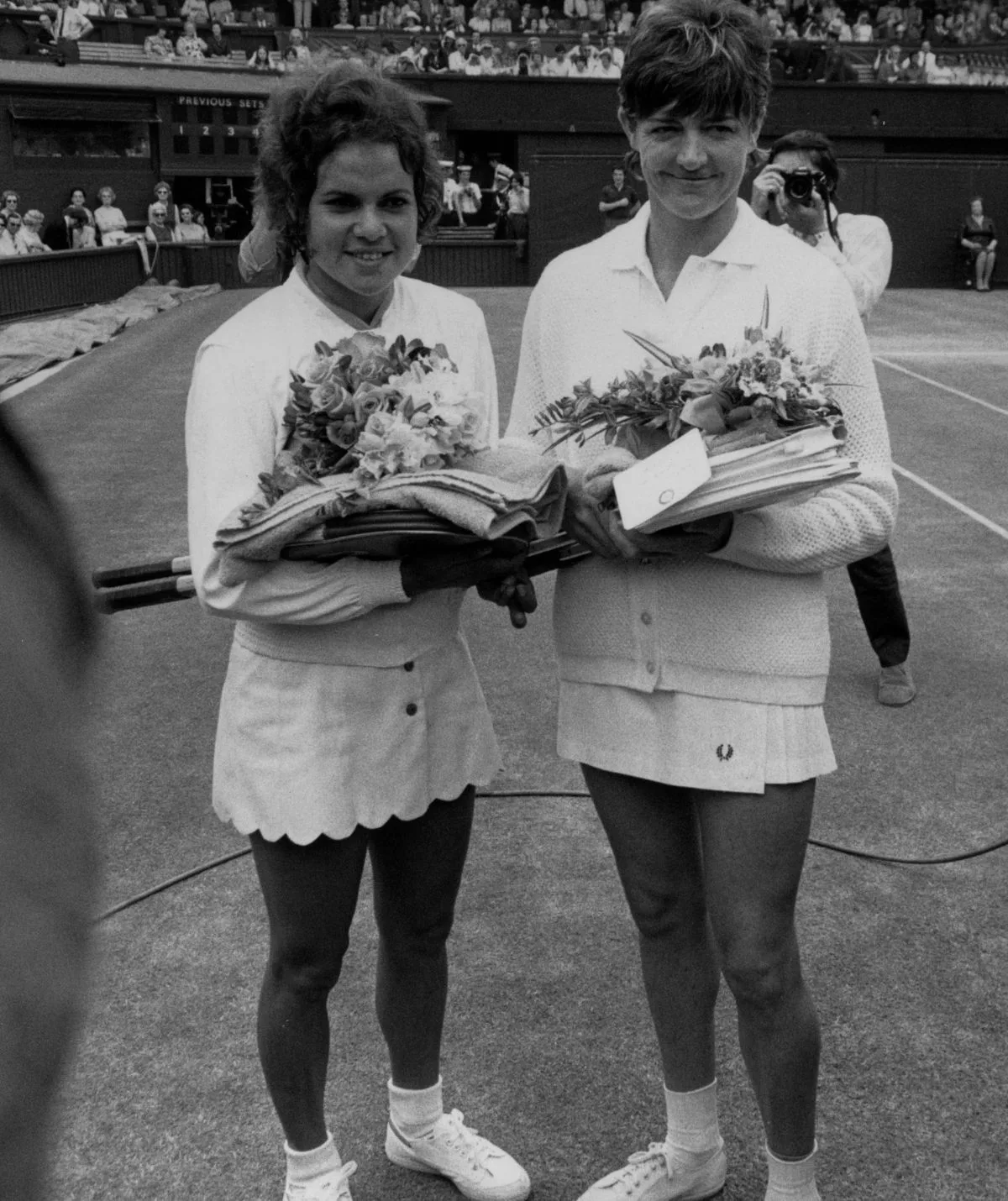
Shared dreams
I knew that Ash Barty shared the same dream as me: she wanted to win Wimbledon. After taking more than a year away from tennis, Ash returned to the sport in 2016, and she worked towards making her dream a reality. I knew she had it in her.
In 2021, 50 years after my first Wimbledon win, Ash walked onto the hallowed ground of Centre Court. She wore a skirt with a scalloped hem, inspired by the Teddy Tinling dress I wore all those years ago. I thought that was such a lovely touch. I hoped the look would bring her luck – as it had done for me – and I had a feeling it would. I messaged Ash four words before the match, “Dreams do come true.”
I watched the final at home in Noosa, and it gave me a glimpse into how my family must have felt watching me play at Wimbledon back home in Barellan, crowded around the TV, cheering and carrying on.
To me, Ash feels like a little sister. She is part of my family. I felt so many emotions – nerves, hope, excitement – as I watched her play Karolina Pliskova. Ash won the first set but lost the second in a nail-biter. I felt like I was riding a rollercoaster. In the tiebreaker, Ash gave it her all and she deservingly took the crown. She became the first Australian woman to win Wimbledon since my 1980 title. I was over the moon for her.
Family and weddings
It’s no secret that Roger and I love a wedding – we had three of our own – so we were thrilled when [our daughter] Kelly got engaged to David Loats, a former AFL player and gentle giant of a man. Fittingly, the two had met at a wedding in 2008 and had instantly clicked.
I remember Kelly calling me and saying, “Mum, I’ve met the nicest man. He even opens doors for me!” I could hear the happiness in her voice then, and it was still there a few years later when David proposed on the back of a camel – of all places! – while they were on a holiday in Dubai.
David sees the beauty in things – the reflection of the water, the afternoon light, and our daughter. That last one isn’t hard to see – Kelly is a stunning woman. She is vivacious, outgoing and knows how to have a good time. You can always hear Kelly before you see her, and she still has an American twang in her voice.
It was drizzling on the day Kelly and David got married in Noosa at the end of 2012, but the weather didn’t dampen anyone’s spirits. Kelly made quite the entrance… on the back of a camel.
The wedding venue was our favourite local restaurant in Noosa on the river. To get there, you have to cross over a small wooden bridge. That presented a problem during the wedding rehearsal when the camel didn’t like the gaps between the wooden planks and refused to walk across the bridge. We had to find another route for the camel – crisis averted – and the wedding was seamless from there.
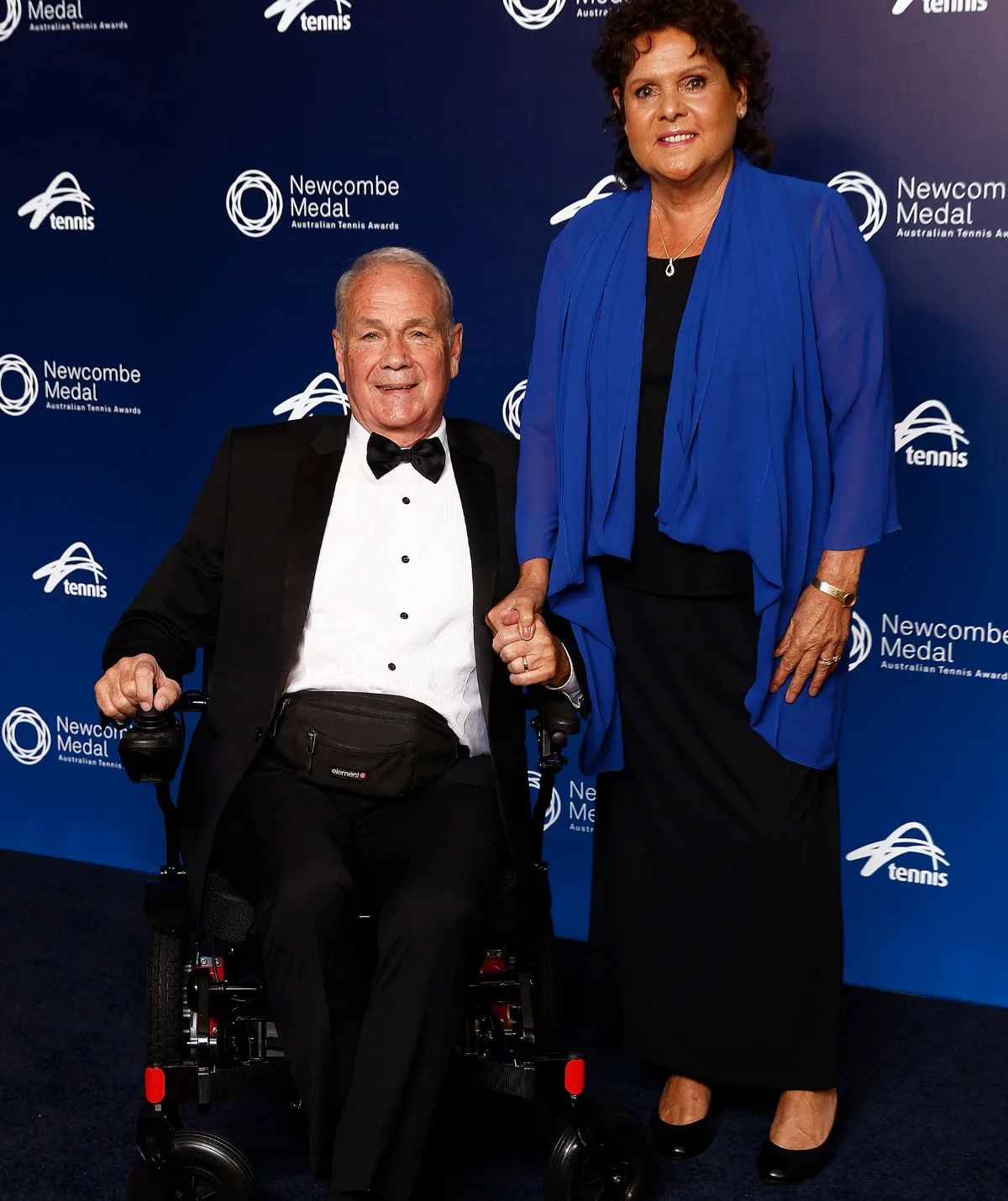
It is such a joy getting to see your children find happiness. In 2013, [our son] Morgan and his fiancee, Sophia, welcomed their daughter Beau Maya to the world. We were at the hospital when our first grandchild was born, and it was a feeling like no other.
The Sydney Morning Herald published an article sharing the happy news, and I told them, “I used to say during my career that the biggest gift was having my children. But this is my second-best gift and better than any trophy. I’m very excited. Both are well and looking fantastic. I can’t wait to babysit.”
After Beau came Kelly and David’s daughter, Lucy Nikkita, in 2014, and Morgan and Sophia’s son, Theodore James Yarraga, in 2017. The grandkids have inherited my curls, and I like to think some of my sporting abilities, too. Lucy had her first tennis lesson at three and she was a natural, and Theo has developed an impressive golf swing. I would never put pressure on my grandchildren to follow in my footsteps and play tennis. Instead, I’m encouraging them to chase their own dreams, whatever they may be.

Related stories
Native ad body.
Native ad body.
Native ad body.