





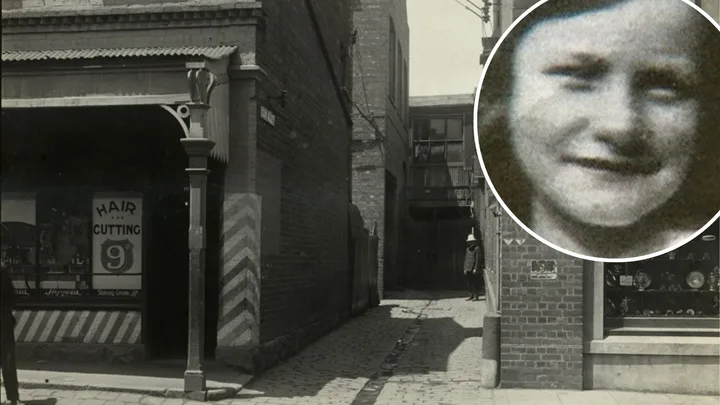
It was dawn on December 31, 1921, after what had been a sweltering and raucous summer night in a part of Melbourne reputed to be a “haven for evil characters” and awash with bars, brothels and betting shops – when a grim discovery was made.
The body of a dead, naked young girl with long red hair was found on her back with her legs bent under her a short distance down Gun Alley, a dead-end,
L-shaped lane which ran south of Little Collins Street.
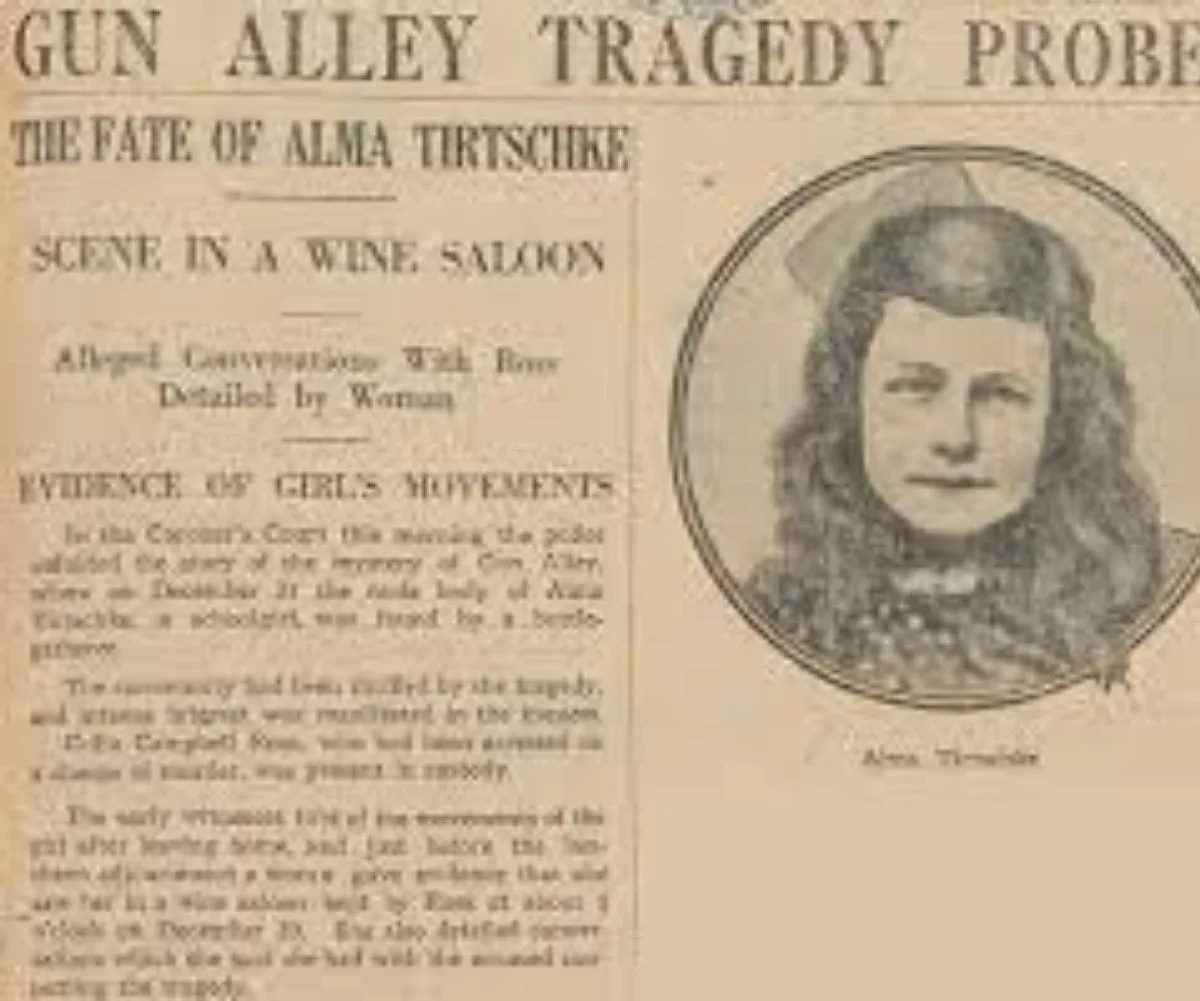
Thee body was that of Alma Tirtschke, a quiet and studious schoolgirl, who lived with her grandmother in Jolimont.
The 12-year-old had been reported missing the previous day, after vanishing while running errands for her aunt in the city.
It was the start of what would become one of the biggest miscarriages of justice in Australian history, with an innocent man hanged after a botched police investigation and evidence from an assortment of shady characters.
The last time Alma was seen alive was when she left her grandmother’s home about noon on December 30, 1921, to catch a tram into the city and visit a butcher’s shop in Swanston St, to collect a parcel of smallgoods for her Aunt Maie.
With no witnesses to the murder and very little in the way of physical evidence – and an outraged public baying for blood, there was immense pressure on Criminal Investigation Bureau senior detectives John Brophy and Fred Piggott from the outset.
SQUALID & DEPRESSING
Alma had been sexually assaulted and then strangled and moved from where she had been killed to Gun Alley.
Her clothes were never found, and her body appeared to have been washed before being dumped.
The crime scene was also in a the nnotorious part of Melbourne The Herald described as “squalid and depressing”.
The Age labelled it “a haven for evil characters”.
The crime was so shocking that thousands flocked to Gun Alley and the murder was headline news for weeks.

The detectives were able to slowly piece together Alma’s last movements, including a sighting of the slightly built schoolgirl wandering aimlessly near Eastern Arcade, which ran between Bourke and Little Collins Streets about 2.30pm.
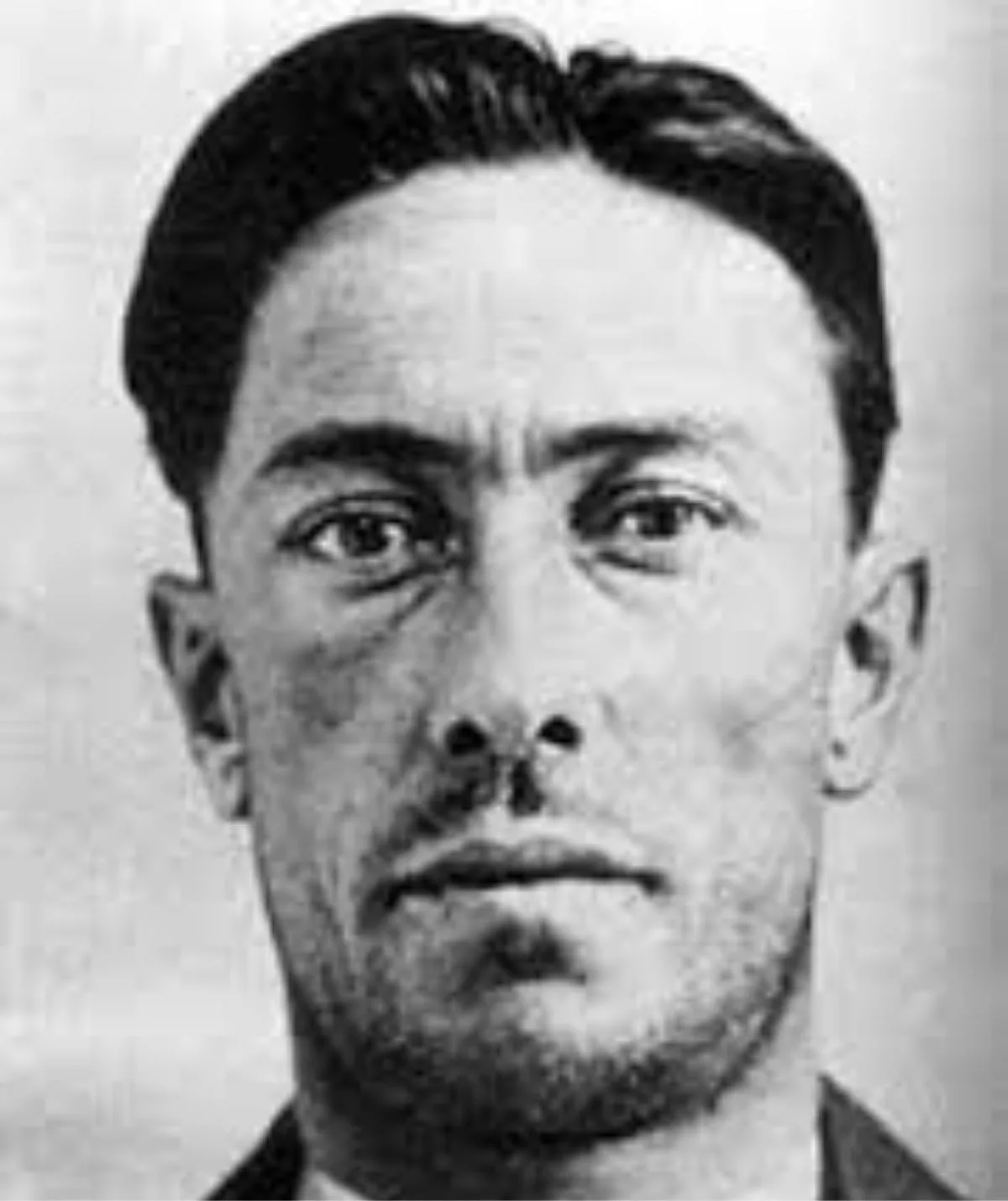
Australian Wine Saloon licensee Colin Campbell Ross, 29, volunteered that he had seen Alma pass his rather disreputable establishment shortly before 3pm.
It was something that he would live to regret as he soon became the prime suspect in Alma’s murder.
A number of other witnesses told police Alma looked “agitated”, “nervous” or even “scared”, and police started to focus their investigation on the hapless licensee, who had the misfortune of a criminal record and a known violent temper.
The year before Alma’s murder Ross was arrested after he pulled a revolver on his girlfriend when she refused his marriage proposal but was let off with a small fine and a suspended sentence after it was deemed the act of a heartbroken man.
It would come back to haunt him – he was arrested on January 12, 1922, at his home in Footscray after police found several strands of brightly coloured hair on a blanket.
The chief government scientist later testified that he thought the hair matched Alma’s.
It was a time when forensic science was relatively new and scientific evidence involving hair samples had never been used as a key part of a murder trial.
His fate was sealed when barmaid Ivy Matthews came forward to say she had seen Alma in the saloon, despite initially claiming she hadn’t.
Even more sensationally, she claimed that Ross had confessed to killing Alma, testifying that he told her “he ravaged her but did not intend to kill her”.
A second witness, Olive May Maddox, also came forward to say she’d seen a young girl in the saloon on the day of the murder.
She was later revealed to be a friend of Ivy’s.
It was also uncovered that Ivy claimed Ross owed her money.
AN INNOCENT MAN
Nevertheless, the jury took just one day to find Colin Ross guilty of murder and he was sentenced to death.
Two appeals failed, despite a new witness coming forward to say he heard several high-pitched screams from a young girl coming from the Adam and Eve Hotel in Little Collins St between 3.15pm and 3.30pm on the day Alma disappeared.
When Ross was executed on April 24, 1922, his last words were, “I am an innocent man.”
And his innocence was proven when the case was re-examined in the 1990s, with DNA analysis showing that the damning hair samples were not Alma’s and the witness testimony was contradictory.
He was granted a history making posthumous pardon in 2008.

