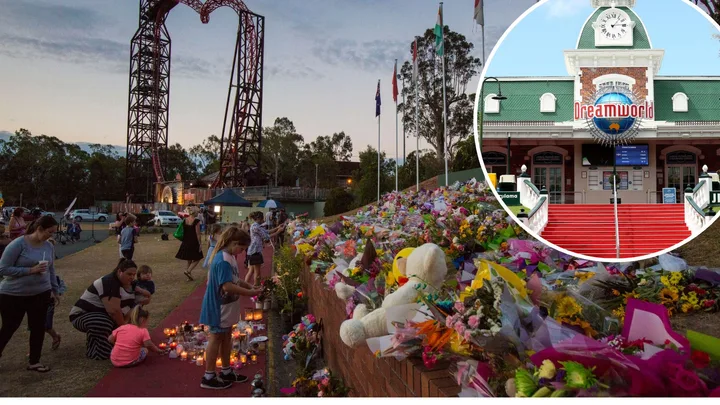
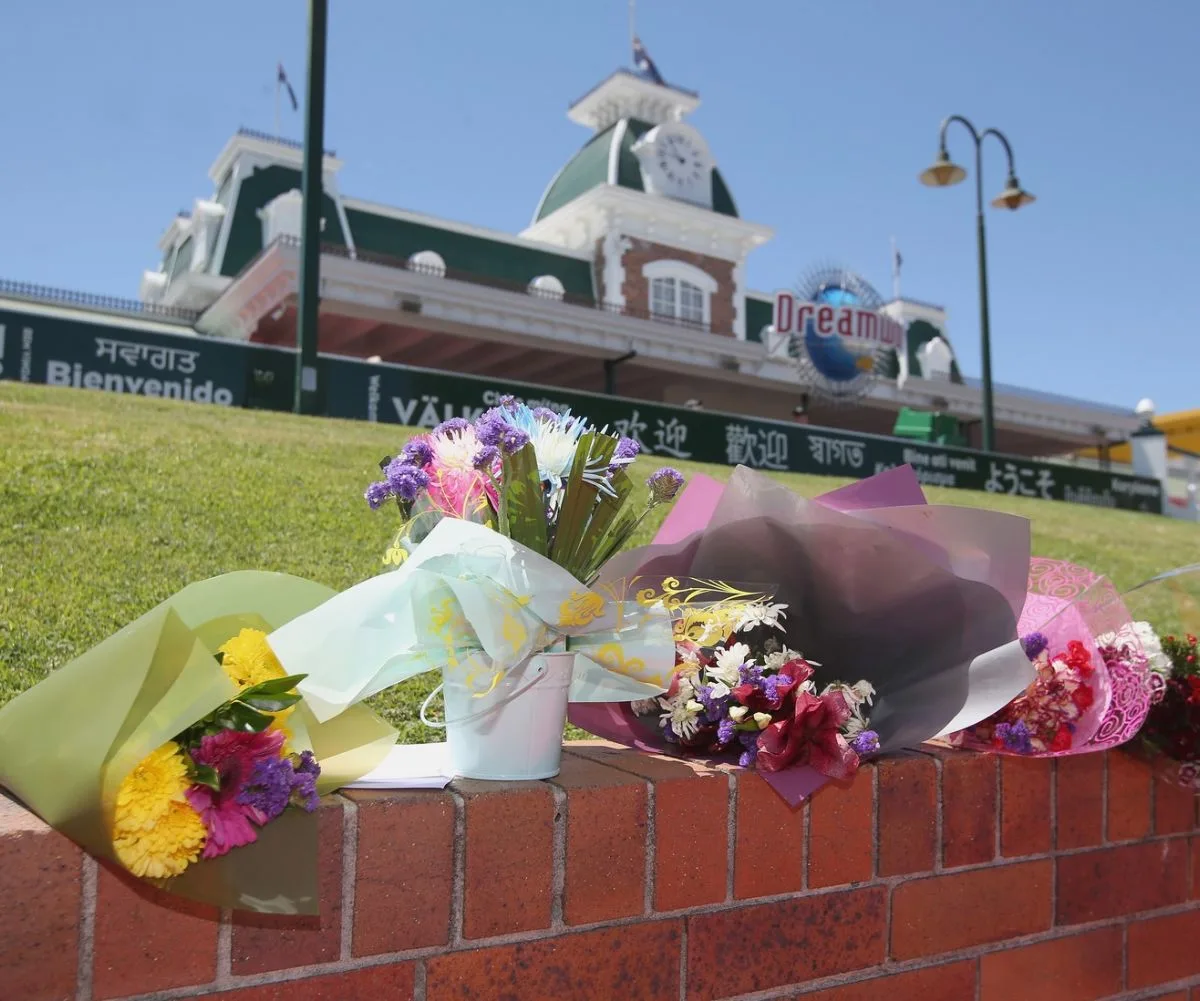
It’s been a decade since four people lost their lives at Dreamworld on the Gold Coast, when the Thunder River Rapids ride malfunctioned.
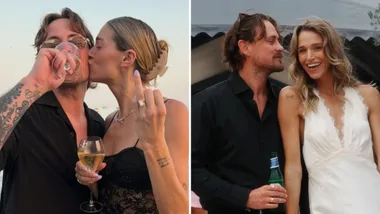
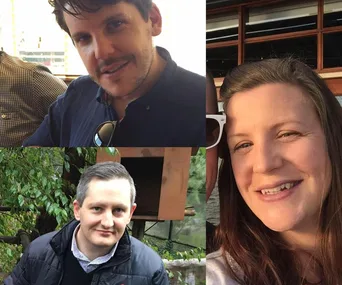
On October 25, 2016, Luke Dorsett, his sister Kate Goodchild and his partner Roozi Araghi, and Cindy Low, were killed in the incident, which resulted in the theme park’s operator being fined $3.6 million for breaches of workplace health and safety laws.
The Queensland Coroner later described the park’s safety practices as “irresponsible” and “dangerous”.
Michael Clancy was a guest services manager at Dreamworld and he shared what he witnessed on that fatal day with Woman’s Day in 2023.
“Those images will never leave me,” he said at the time. “It was horrific.”
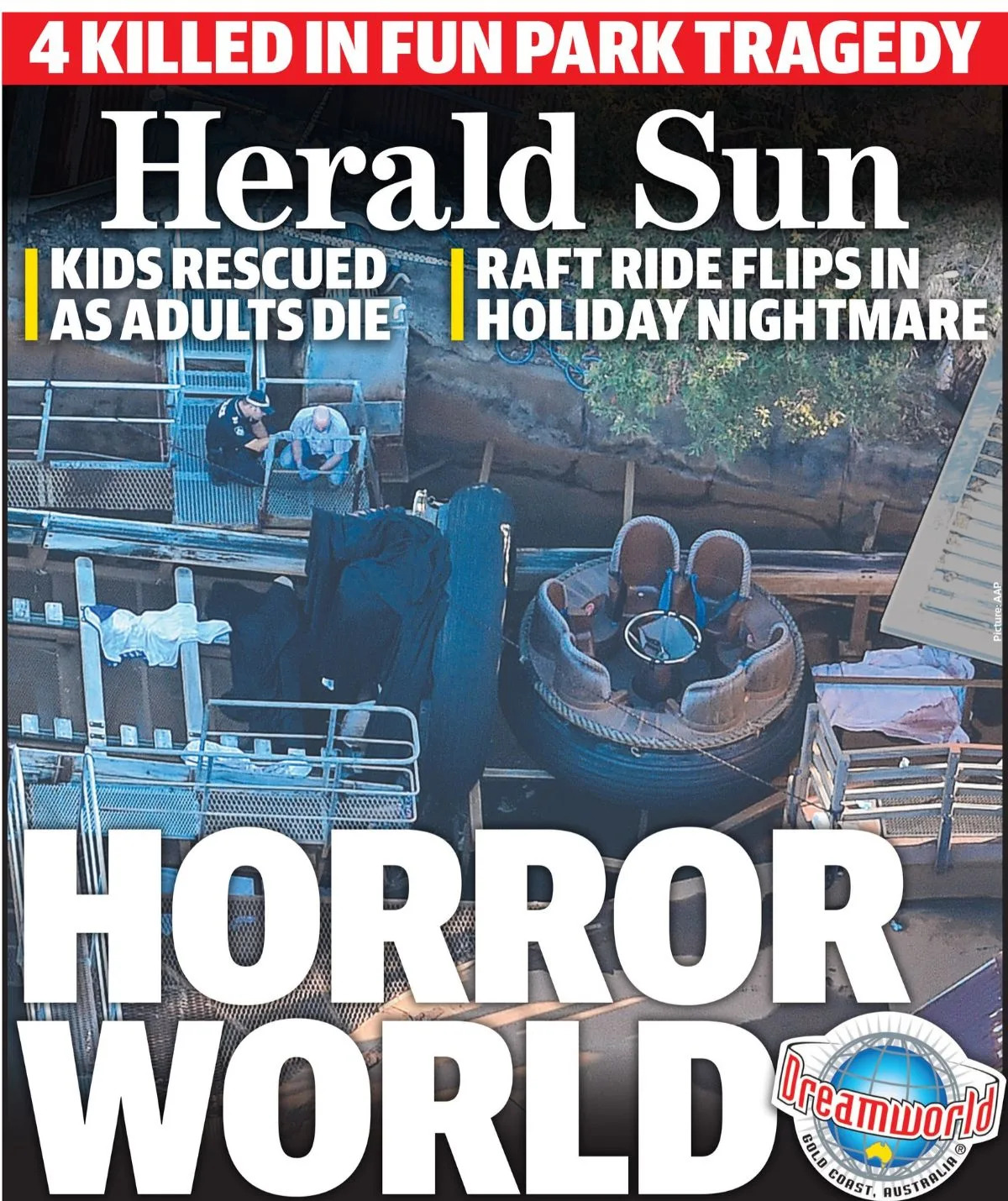
There were many acts of heroism in the split seconds before and after the terrible accident. Luke Dorsett was awarded a posthumous Commendation for Brave Conduct after sacrificing his life to save his then 12-year-old niece, Ebony, by throwing his arm across her to keep her safe inside the raft as it flipped.
Bravery of strangers
Onlookers rushed in to help in the aftermath and four people – Danny Haber, 16-year-old Thomas Hanson, Joedy Vincent and Steven Apthorp – were also awarded with bravery medals and citations.
In the ensuing chaos Michael helped victims and helped evacuate park-goers. But having been a member of staff, he and his family faced abuse from members of the public in the months afterwards.
“I was spat on, kicked and had death threats sent to me,” he admits. His daughter Tegan, then nine, and Riley, eight, were bullied at school.
“Tegan said she didn’t want to tell me [about it] because she didn’t want me to be any more upset than I was already. That made me feel even worse,” he said in 2023.
The trauma took its toll, and three months after the incident, Michael left his job.
“I just couldn’t get through another day of abuse,” he explained.
He started to experience severe anxiety attacks and found it hard to leave the house.
“I’d regret waking up in the morning,” he said. “I didn’t want to be part of this world any more.”
After seeking professional help, Michael was diagnosed with post-traumatic stress disorder. At one point he was taking 29 different medications.
“One day, I literally could not get off the floor,” he said. “That was my lowest point, I couldn’t function.”
A parrot called Archie
In 2018, still unable to leave the house, Michael saw an online advert for a parrot for sale near his home on the Gold Coast.
“He looked like something out of a Dr Seuss book,” he recalled. “I said to my wife, ‘That bird is peculiar enough that it will fit me.’ He looked so weird, I knew I had to have him.”
The bird was an eclectus parrot, which Michael named Archie.
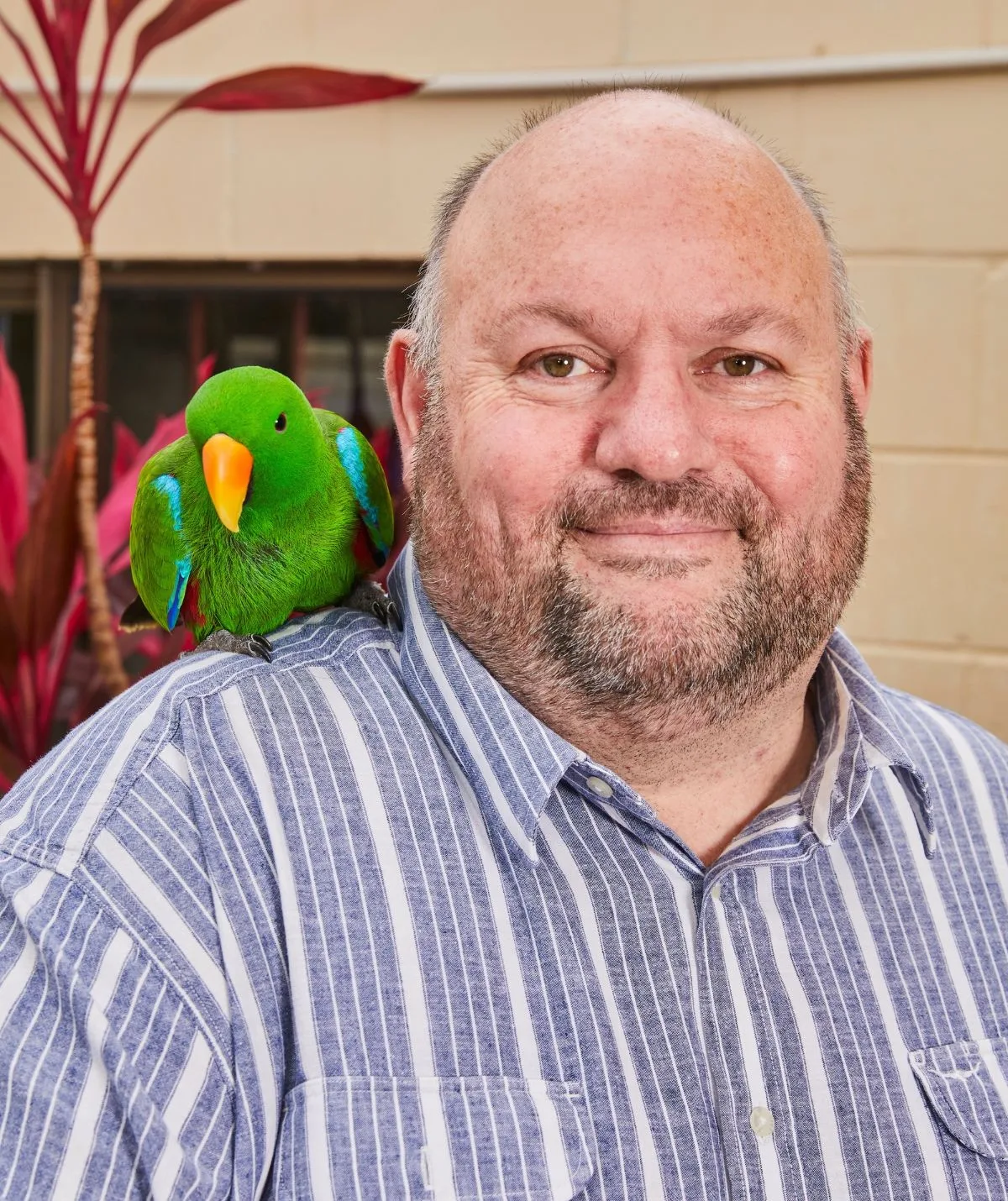
“He flew straight to my shoulder and put his beak on my cheek. I knew then there was an emotional connection. I believe he knew what I needed and how to behave around me,” he said.
Michael drove home with Archie on his shoulder – and soon became his best friend.
“Archie gave me a reason to function,” he said. “I was forced to go out because he needed fresh air, or I had to buy him things from the pet shop. He came to all my appointments with me. He helped me get my confidence back.”
Six months after getting Archie, Michael felt better than he had in over two years.
“I called it ‘Archie Therapy’,” he said.
After realising the positive effects of having a “support bird” with him, Michael decided to breed a few birds, with the aim of giving them away to trauma victims.
People in need
Michael’s wife Anna, Tegan and Riley pitched in and helped, feeding the baby birds every four to six hours. The family also made sure every bird was properly trained.
“We take them to barbecues, the shops, and have them interact with other animals,” said Michael.
“They need to be able to cope with noise so they don’t make people’s anxiety worse.”
Word got out about Michael’s initiative, and soon people were clamouring to take a bird home with them.
“We gave them to people in need – from domestic violence victims to returned soldiers, to people living with mental and physical disabilities.”
Michael eventually found some premises to keep the birds, and Parrots for Purpose was officially born.
By 2023 it had given away more than 700 birds to people who need emotional support. They also held regular sessions where people can come and interact with the birds.
“I wanted to create a safe environment where anyone can come and feel supported without judgement,” he explained.
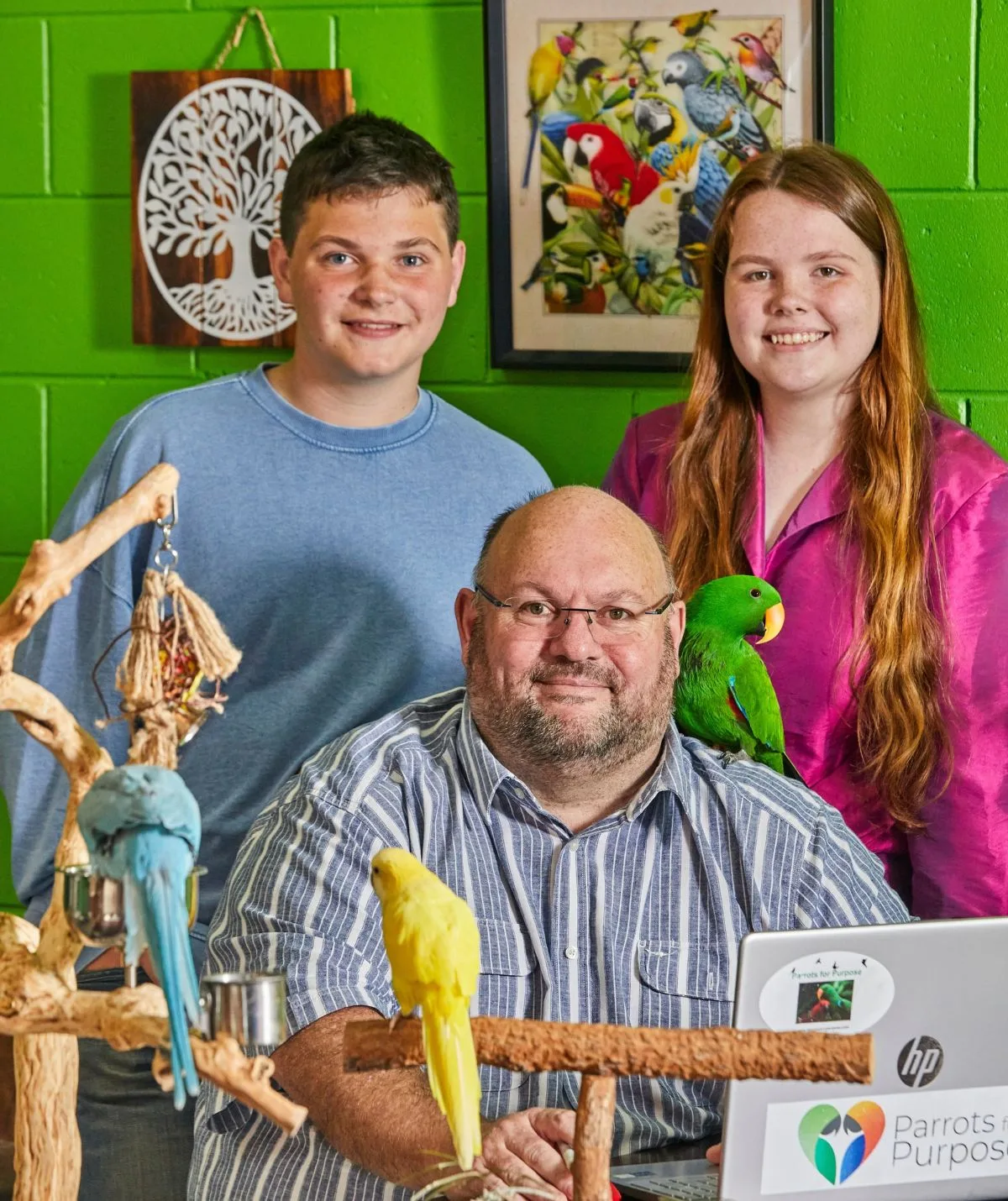
Parrots for Purpose survives on donations and fundraising and is still going strong, three years after we talked to Michael.
Through its supportive programs, interactions and bird partnerships it helps people facing loneliness, trauma, disability, PTSD, anxiety, depression and chronic illness find hope, friendship and purpose.
Michael’s now adult daughter, Tegan, now works at Parrots for Purpose. Three years ago the then-16-year-old told Woman’s Day said of her dad, “We’re so proud of him. It’s so good to see him smiling again.”
Michael said, “I’ve been at rock bottom, but now I have the opportunity to help others.”
“I know I can’t change the world, but I can try and make the world a little happier, one bird at a time.”
To find out more or to donate, visit parrotsforpurpose.com. Call Lifeline on 13 11 14 for support