






NEED TO KNOW
- Chris Hemsworth carries two copies of the APOE4 gene, which increases his lifetime risk of Alzheimer’s.
- He has since made major lifestyle changes to protect his long-term brain health.
- In the new Nat Geo documentary Chris Hemsworth: A Roadtrip to Remember, the actor reveals his father Craig’s early Alzheimer’s symptoms and the family’s attempt to slow his cognitive decline through reminiscence therapy.
Chris Hemsworth first confronted the reality of Alzheimer’s disease in 2022 while filming Limitless. Genetic testing revealed he carries two copies of the APOE4 gene — a combination that only 2–3% of the population has, according to the NIH. While not a diagnosis, the result significantly raises his lifetime risk.
At the time, Chris admitted he was wary of sensationalising the news. “My concern was I just didn’t want to manipulate it and overdramatize it… It’s not like I’ve been handed my resignation,” he told Vanity Fair at the time.
Still, the discovery sparked a major shift. He announced he was stepping back from acting to reprioritise his health and family life, noting how quickly his children are growing up and how much he wants to “soak it in.”

(Credit: Instagram)
How Chris changed his life after the test
Chris later explained to Men’s Health that his approach to wellness became more brain-focused. Physical fitness had always been a core part of his routine, but he began fine-tuning his habits to support long-term cognitive health.
“Whatever work I’m doing for my brain health benefits the rest of my body – we turned it into a positive,” he said.
His new habits include: Mindfulness through physical activity, especially surfing, which he says forces him “out of my head and into my body.” Breathwork and meditation, often practiced during sauna and cold-plunge sessions. Better sleep hygiene, including staying off screens before bed and reading at night. More cardio and endurance work, supported by research showing heart-rate-raising exercise can benefit memory and thinking.
These changes, he said, helped him find more “stillness” than he had at any point in his career.

(Credit: Instagram)
Now his family is facing Alzheimer’s again
Chris’s personal connection to Alzheimer’s deepened recently when his father Craig began showing early symptoms. In his new Nat Geo documentary Chris Hemsworth: A Roadtrip to Remember, the actor offers a rare, emotional look at the family’s efforts to slow Craig’s decline.
The documentary centres on reminiscence therapy, a technique that uses meaningful memories and familiar environments to strengthen neural pathways. Clinical psychologist Dr. Suraj Samtani, who consulted on the project, explains that revisiting old memories can reinforce the brain’s connections. “Every time we re-access a memory, the connection between the neurons gets strengthened,” he told People.
In the film, Chris and his family go to remarkable lengths: filmmakers recreated their 1990s family home using old family pictures for reference. Other moments capture Craig struggling with repeated questions, which Chris describes as the first time he truly noticed symptoms emerging.


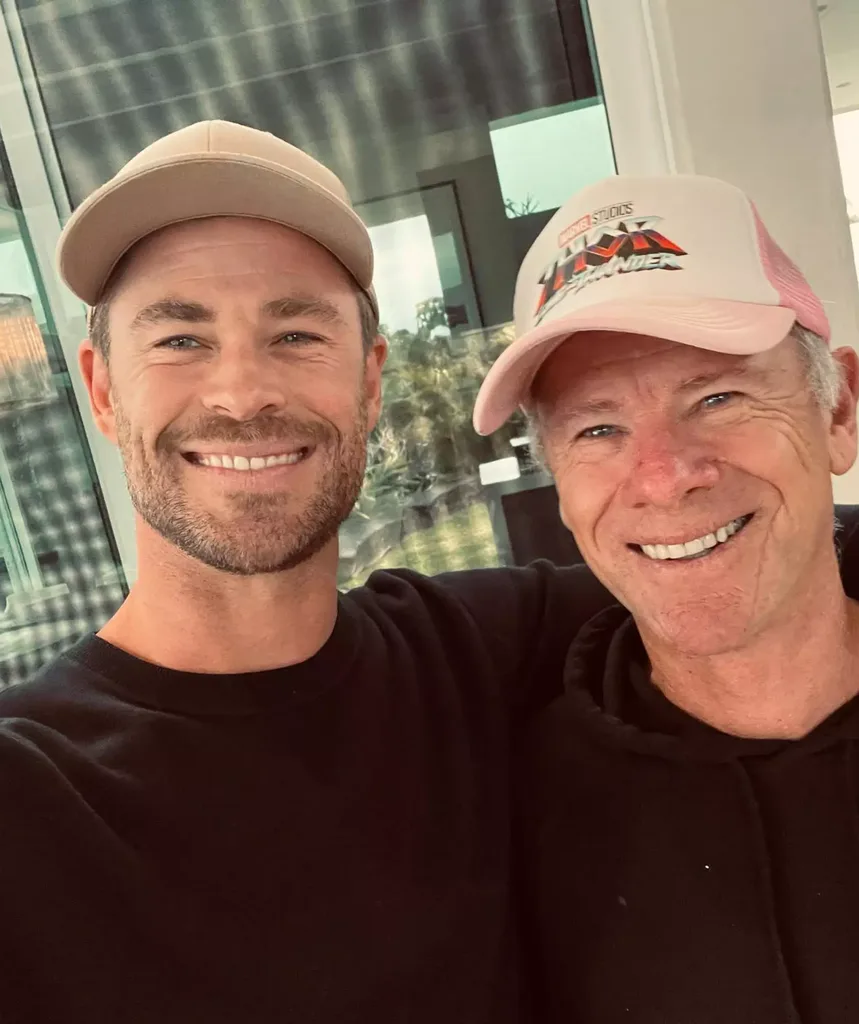
Inside Chris and Craig’s road trip
The documentary also sees father and son embark on a 200-mile motorcycle trip to reconnect with Spencer, an old friend Craig once worked with wrangling wild bulls in the outback — a dangerous, adrenaline-heavy job he remembers vividly.
According to Dr. Samtani, these emotionally charged memories are often the strongest. He notes that adrenaline-filled experiences are stored differently in the brain, sometimes allowing people to re-feel the intensity of the original moment when recalling them.
As the road trip unfolds, viewers see Craig become more animated, laughing, recalling stories, and gaining confidence. Samtani said the transformation was clear: from confusion at the start to reconnecting with important memories by the end. “I saw him initially being really reserved… and by the end, he’s laughing, he’s smiling, he’s remembering,” he said.
What the family learned — and what comes next
Samtani stresses that reminiscence therapy requires ongoing practice, with benefits lasting three to six months. But perhaps the most important message the documentary delivers is that Alzheimer’s isn’t an immediate end point. As he explains, many people can still live full, active lives with the disease, and meaningful social connections can help slow decline.
For Chris, the project is not just an exploration of therapy, but a deeply personal attempt to preserve his father’s identity for as long as possible. It mirrors the lessons he learned from his own genetic test: to be present, to prioritise family, and to build a life filled with connection and purpose.

