





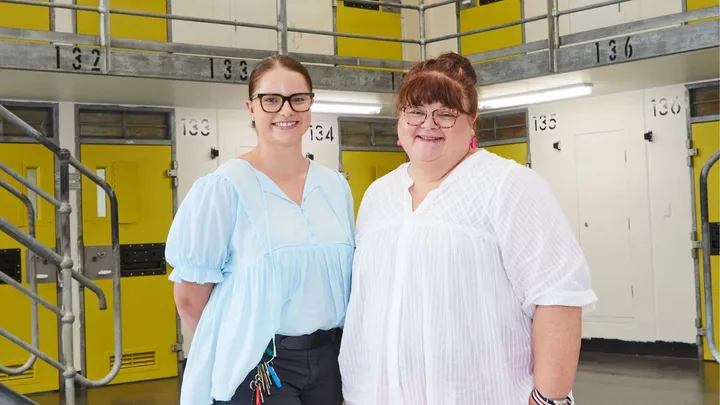
There’s a strange eeriness in the air as Woman’s Day walks through the doors of Wellington Correctional Centre in the NSW Central West.
Home to some of Australia’s most dangerous prisoners, the infamous jail has seen riots, fires, sieges and even a mouse plague. But not today.
“When it’s quiet, that’s when you know something is about to happen,” services and programs officer Margie, 58, tells us as we tour the cell blocks inside the men’s maximum-security block.
Despite the bustle of green-clad inmates who are finishing up their morning jobs and the welcoming sight of correctional officers standing nearby, there’s a feeling that the mood could shift at any moment.
And as Margie and her colleague Heidi admit, it’s not always the scariest inmates who are the biggest threats.
“If I’ve got a murderer, they can be politer and treat us better than someone who’s in here for a petty charge,” says Heidi, 22.
“There’s no cookie cutter criminal… and I’ve seen a terrorist all the way down to a drink driver.”
LESSONS LEARNED
As two of 16 officers, or “SAPOs” as the inmates like to call them, at the jail, located 50km south of Dubbo, the women work one-on-one with violent inmates, such as murderers, thieves and domestic violence perpetrators.
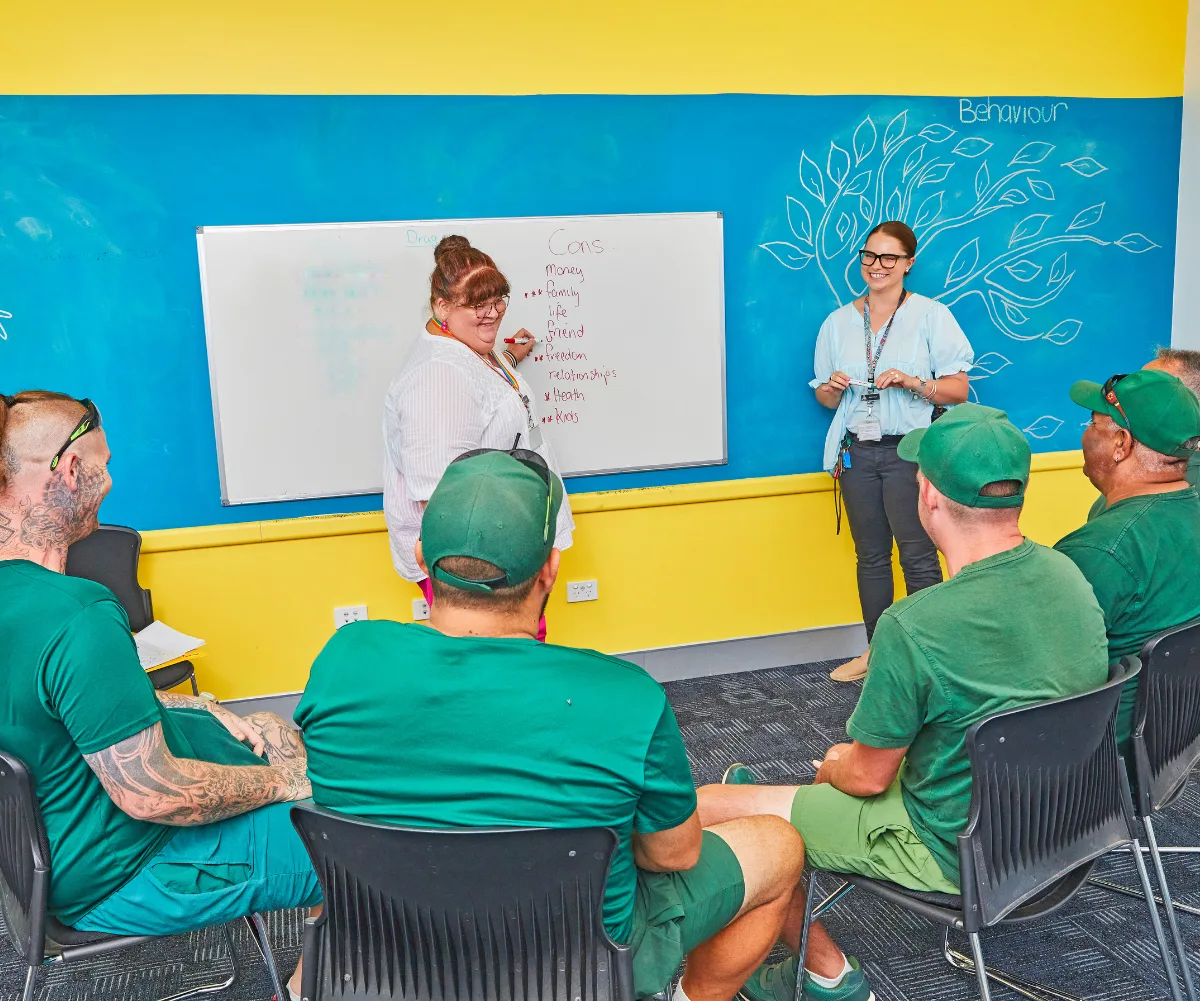
The four-month High Intensity Programs Unit, which sees groups of up to 18 male inmates at a time, focuses on topics such as family violence, addiction and aggression and gives them the tools to put their right foot forward.
“To put it in its simplest form, our job is to rehabilitate,” says Margie.
“We try to set them up so they don’t fail when they’re released. It’s about whether [inmates] can recognise their triggers, take what we’re teaching them and apply it in their own lives.”
As we pass through the remand processing block, the duo share tales about their experiences in corrections.
For Margie it’s nine years, after a career swap from family and marriage counselling, and for Heidi, it’s around five years.


The pair share a long friendship – Heidi even went to school with Margie’s four sons!
Now Margie is her mentor.
“I’m super proud [of her],” Margie smiles.
“I’ve found myself becoming protective of her and I think we complement each other.”
INSPIRING WORK
Despite hearing traumatic and confronting stories from inmates, the duo know it’s up to them to keep things level-headed while the programs are in session.
Experts at reading people, they can recognise escalations in behaviour and help de-escalate a situation before it goes further. Neither have ever had to use their duress alarm, which they carry at all times.
While it’s nothing like TV shows such as Prisoner, Wentworth or Orange Is the New Black, as the duo joke, working inside a prison comes with many surprises – namely, what happens when you bump into an ex-inmate when shopping at your local supermarket. They say it happens often!
“It’s not our job to judge people, that’s already been done,” says Margie.
“Our job is to help them and if I find myself judging, I go home and be very self-reflective. If it was my family in here, how would I want them to be?”
Heidi adds, “The inmates need people who are genuine and honest, but also someone who can actually tell them that they can do better – and how to do it.
“I’m here because I want better for our community.”
Moments such as the time a “very respectful” older inmate broke down over his violent crimes are a reminder that they’re genuinely turning people’s lives around.
“You could hear a pin drop,” says Heidi.
“He told us in great detail about what his offending looked like and he was very volatile. In our jobs, it’s pretty hard to shock us. But he did.
“I was shocked but proud… we were able to make that space safe enough for an older Aboriginal man to finally let go of years of offending. And he’d made everyone feel safe enough to share their stories.”
While the duo keep firmly schtum when asked about high-profile inmates such as the now-deceased Kevin Crump, one of Australia’s most despised killers, they say they’ve never refused to work with an inmate.
And yes, anyone can be rehabilitated.
MEASURES OF SUCCESS
However, they say their “success rate” of not reoffending largely depends on the availability of housing in the local area, as many programs only provide a week of accommodation, causing financial stress.
When asked if their job has made them feel differently about people, the duo are reflective.
“It’s made me realise that everyone has their reasons,” Margie says.
“Had I had some of the difficulties that some of our inmates have gone through, I don’t know that I’d be in any different spot.”
Heidi adds, “It can take five minutes to end up in green.”

