





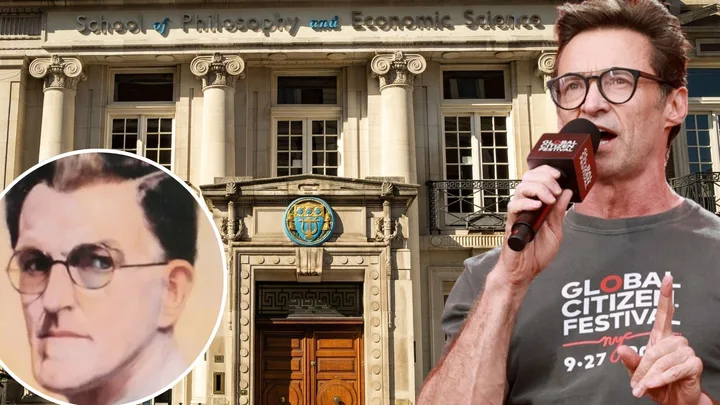
The School of Practical Philosophy sounds harmless enough – affordable, non-academic courses that draw inspiration from Eastern, Western and Hindu philosophical traditions. There’s meditation and learning the ancient language of Sanskrit. They even have a devoted poster boy in A-lister Hugh Jackman, a long-time member who endorses the teachings as life-changing.
Yet the school may have a darker side, with past students and sceptics claiming it’s a pseudo-religion that borders on a cult. The name differs around the world but its leadership and lessons remain the same, and critics say these are questionable.

Recently, one worried user took to Reddit with concerns about their friend joining the London branch. The thread prompted a chilling claim from an anonymous ex-member. They said the “life program” starts spiritually pleasant but grows more controlling.
“It’s a cult. My parents joined about eight years before I was born and I was raised in it… until I left at age 19,” they claimed. “Almost 30 years later and I’m still seeking treatment for the damage it caused me.”
Innocent beginnings
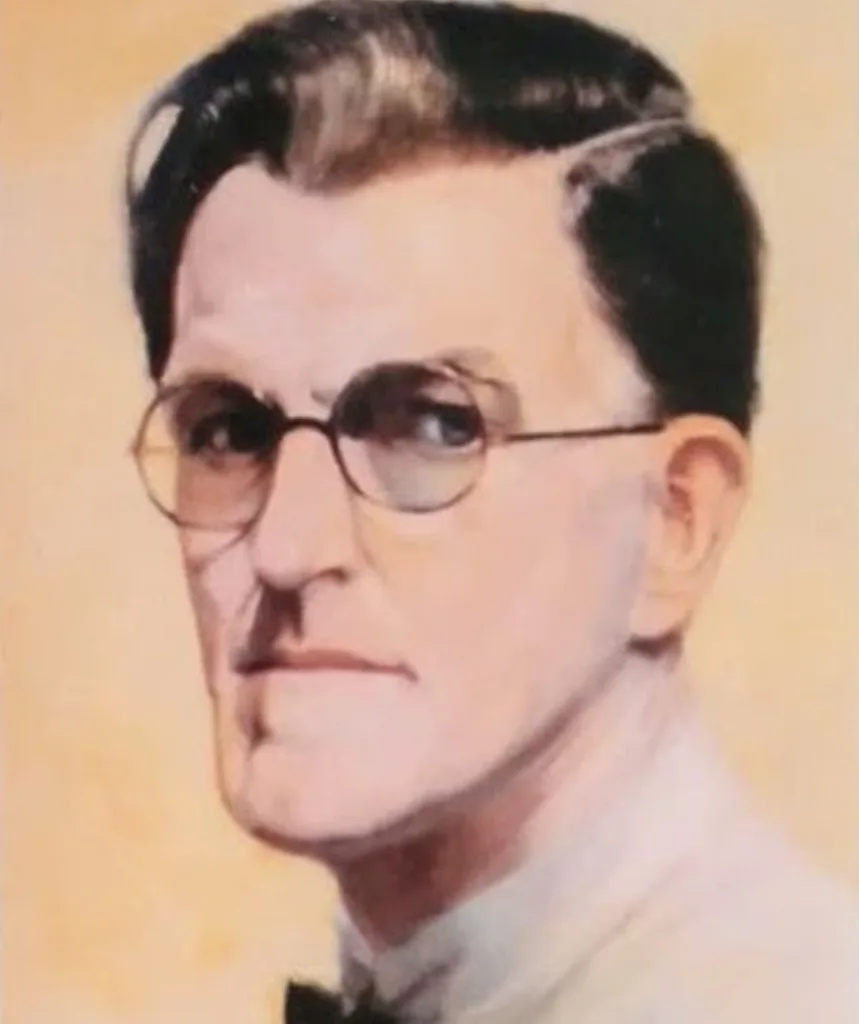
British politician Andrew MacLaren and his son Leon started the movement in London in 1938 as the Henry George School of Economics. The men were inspired by the theories of American economist Henry George. He believed people should own the wealth they produce. However, the value of land and natural resources should belong equally to all.
It’s said the direction shifted when Leon took charge. He changed the name to the School of Economic Science (SES), its title until the 2019 switch to the School of Philosophy and Economic Science.
It was at the Melbourne branch, the School of Practical Philosophy, where 24-year-old Hugh found his re-education on the “truth” of the world. Raised in a strict Christian home, the actor admits he had always found traditional religions too “restrictive”.

A true disciple in Hugh
According to Hugh, 57, the school accepts all people, and is “non-confrontational”.
“We believe there are many forms of scripture. What is true is true and will never change, whether it’s in the Bible or in Shakespeare. It’s about oneness,” he says. “Its basic philosophy is that if the Buddha and Krishna and Jesus were all at a dinner table together, they wouldn’t be arguing. There’s an essential truth.”
Hugh has often spoken about his faith, opening up in 2019 about his and then-wife Deborra-lee Furness’ shared beliefs. At their 1996 wedding, they exchanged rings inscribed with the Sanskrit vow “Om paramar mainamar”, which translates to “We dedicate our union to a greater source”.
“That idea is very close to our hearts,” he said. “Deb and I both studied at the Melbourne School of Philosophy and we both believe in the concept of serving others. We believe very strongly that we should try to make a difference… that bonds us.”


Is it really a cult?
The organisation has had its share of detractors, British actress Emily Watson being one of them. The Hamnet star, 59, was raised in the group and, many years later, spoke about the “unpleasant” environment of the SES-run independent school she had attended in the UK.
“There was extreme behaviour, cruelty and unpleasantness that was very damaging for some people,” Emily said. “I think those organisations keep people close through fear… I’m sure it’s a very different place now, but [at the time] it had no protection built in for the welfare of children.”
In 1984, the book Secret Cult provided an in-depth account of allegations the group used psychological control. However, UK politician Roger Pincham, a long-time SES member, refuted the claims as “disaffected students”.
However, in 2005, an investigation into two of their London schools found former students had been subjected to “criminal levels” of violence. The SES expressed “deep regret” and a reported 45 students who attended between 1975 and 1992 were given almost $2 million in compensation.
“What I have always considered with faith is that it’s the most personal thing but the element of our lives we maybe share the most,” reveals Hugh. “If it leads us to do good things for others then why not.”

