





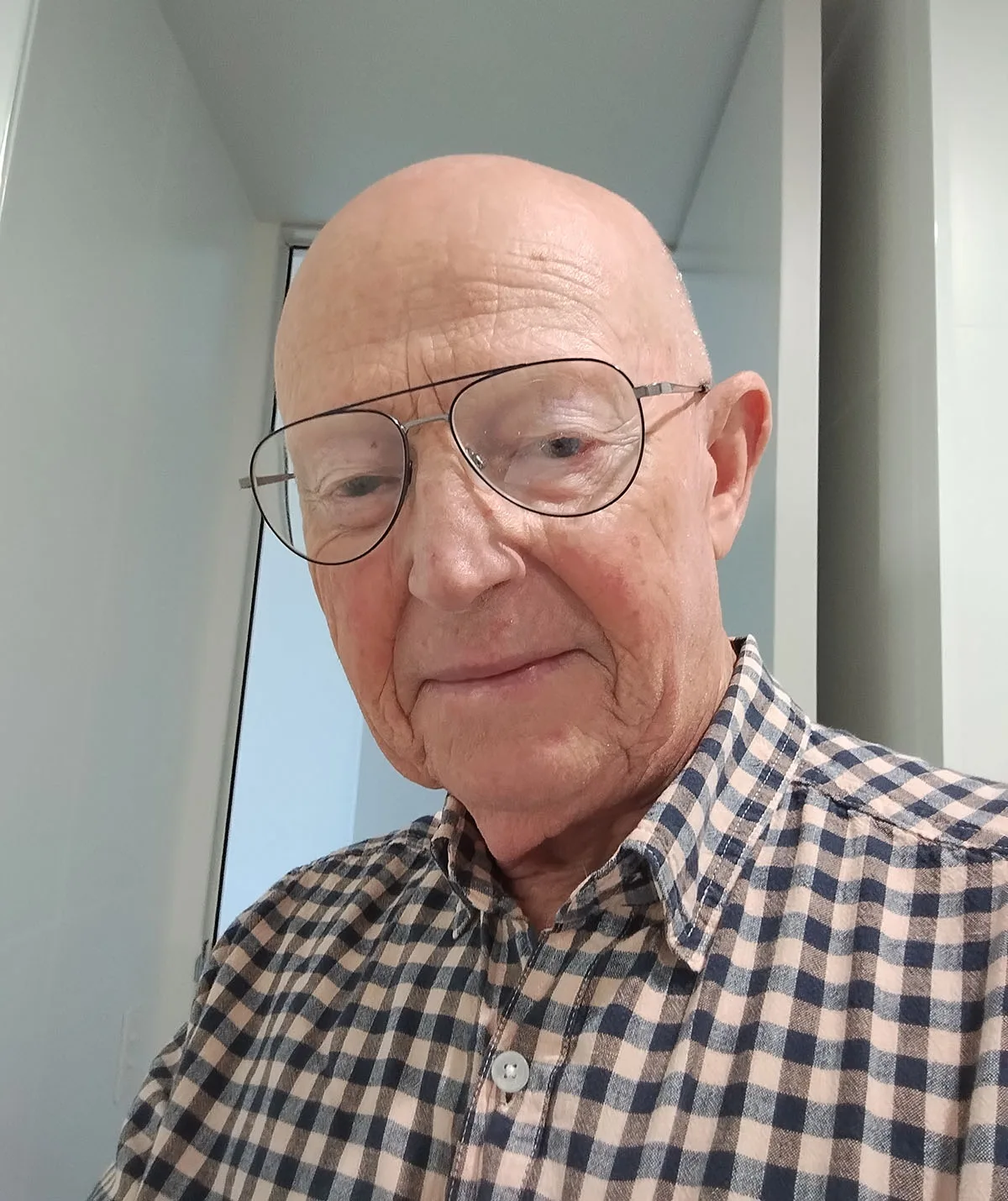
Allen Mawer from Canberra, ACT shares his story of finding buried treasure at Wreck Bay, NSW:
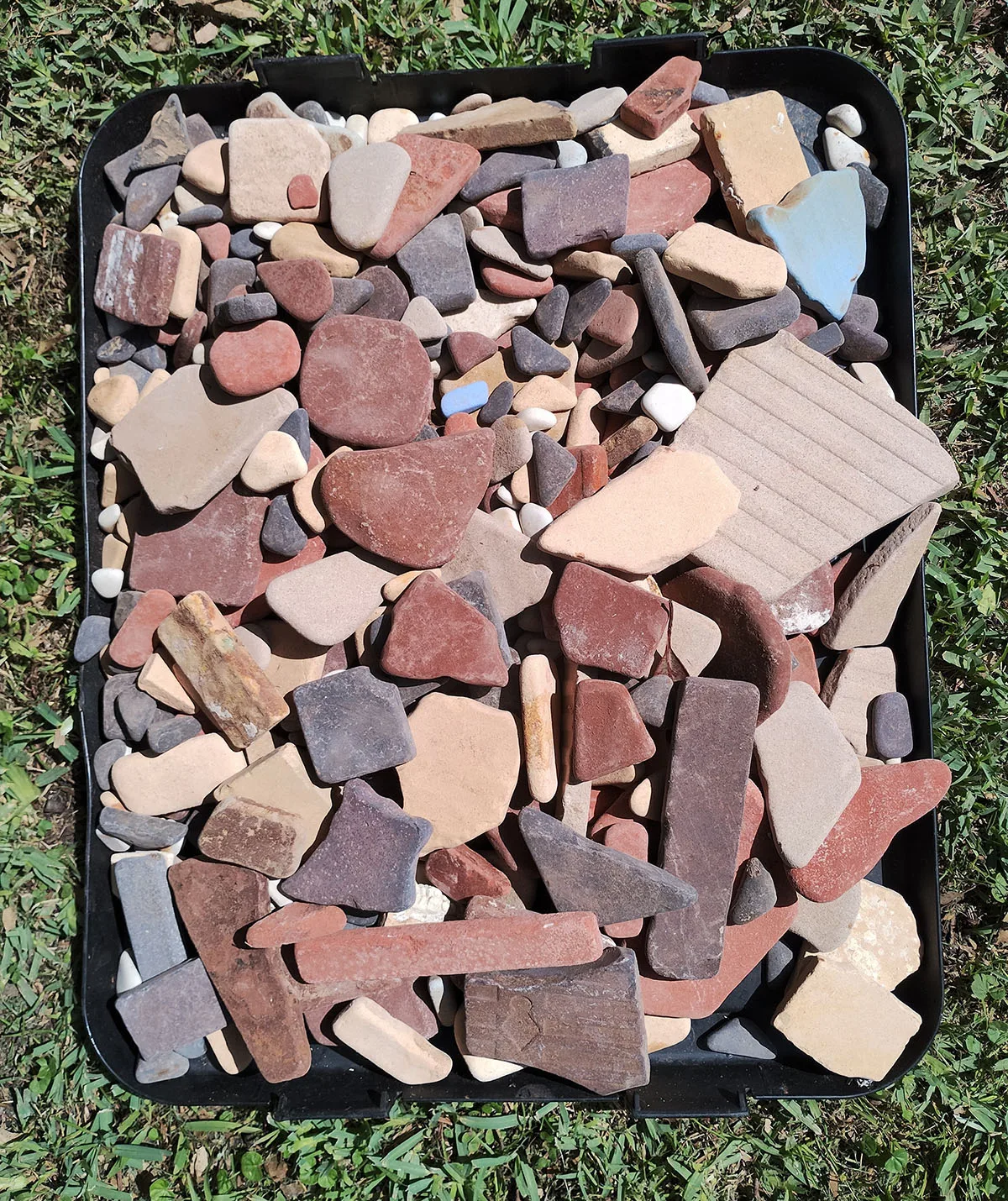
My mate held out a few small fragments of colourful ceramic tile.
“These must be from the Walter Hood,” he surmised.
I shared a holiday house with him at North Bendalong, NSW, and he’d found the pieces while walking the southern end of Wreck Bay.
“What’s the Walter Hood?” I asked.
Read more: “I was shipwrecked and left to die.”
“A British cargo ship that struck a reef offshore in 1870,” he informed me.
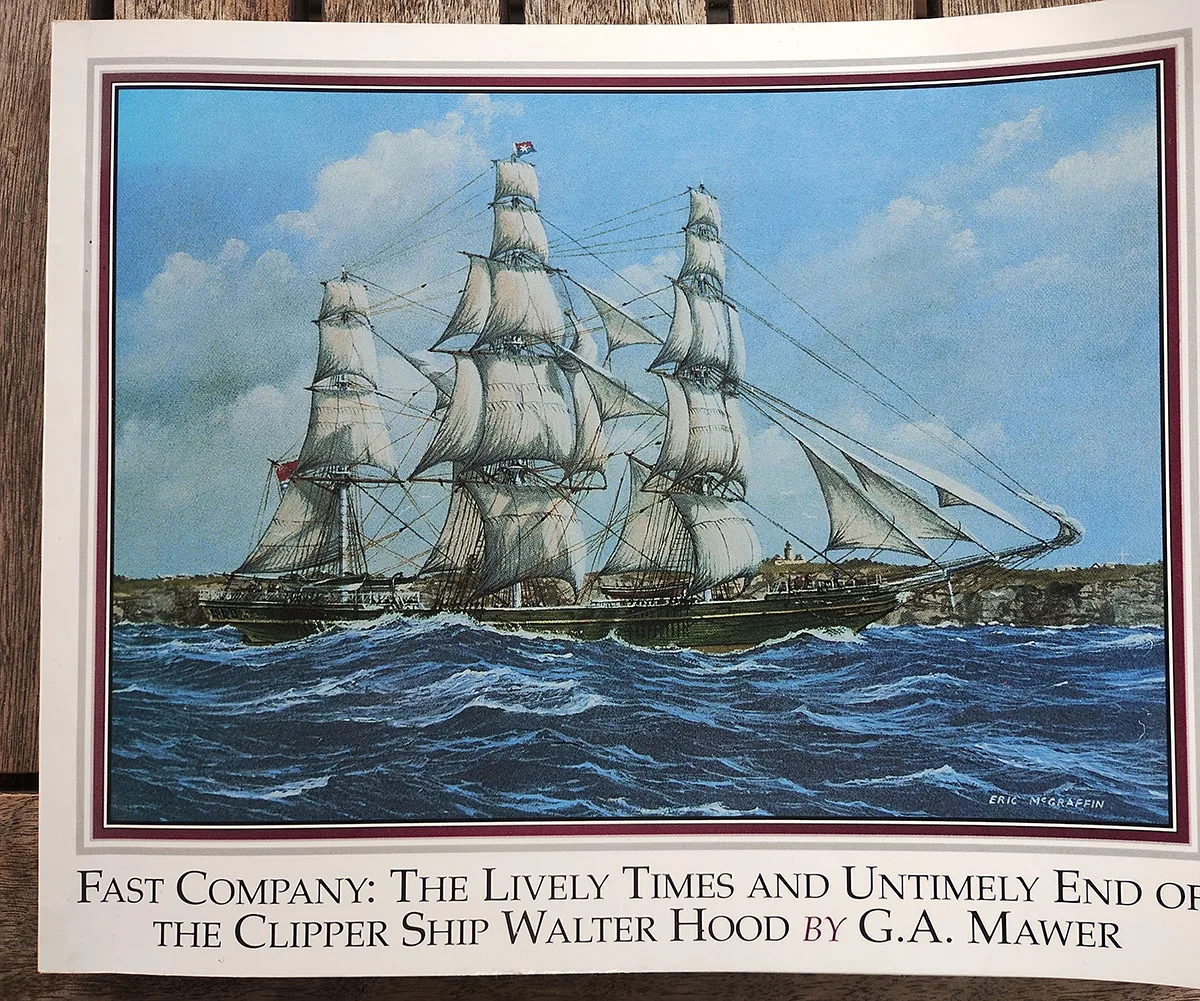
Built in Aberdeen, Scotland, she sailed for 17 years on the London-Sydney trade run.
“There’s a monument about it a mile north of here,” he added.
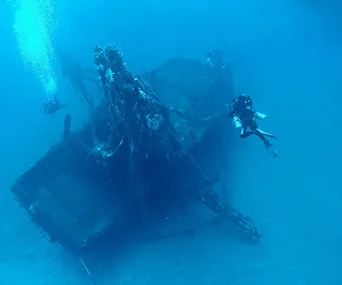
It was 1991, and I was astonished that the remnants of a vessel that had sunk so many years earlier were still turning up.
On my next beach walk, I tried spotting fragments.
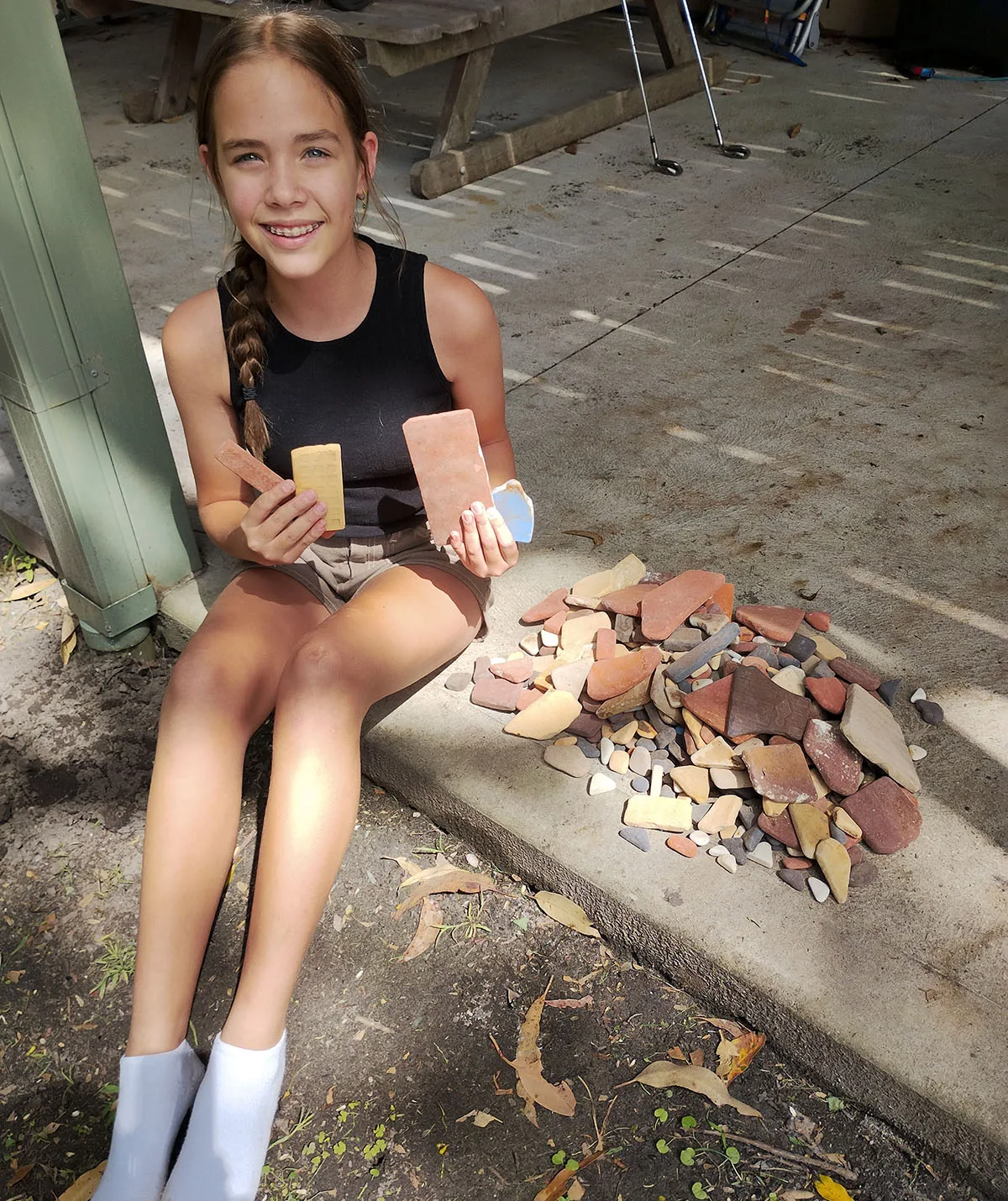
Scouring the sand, I found a smooth triangular tile among the stones.
“How many of these have I trodden on?” I marvelled.
I’d been walking on that beach for over a decade.
My interest in the Walter Hood grew quickly.
I sought out the stone monument among the trees overlooking the Hood’s final resting place.
To the memory of those who drowned, the plaque read.
The captain, a passenger aged 19, and 10 unfortunate sailors were listed.
What could have brought about this disaster? I wondered.
It wasn’t long before I had my hands on Eunice Brady’s history book The Walter Hood, which recounted the grisly details of its demise.
Bound for Sydney, the clipper had become caught in a vicious storm which drove it into the bay.
Standing on the shore near its final resting place, I could picture a 19th-century vessel’s difficulty escaping such a situation.
St George’s Head sits almost due east, and with a strong southerly behind her, the Walter Hood didn’t stand a chance.
Given the area’s remoteness, a rescue mission didn’t start until three days after the accident.
Some had drowned trying to swim for shore, others, including the captain, were washed off the wreck by the violent surf.
Shockingly, those who remained on the vessel resorted to eating the captain’s dog and drinking its blood as they waited for rescue.
With each subsequent visit to the area, I continued to scan the beach for remnants of the ship.
Every walk produced new relics, which were displayed in the makeshift museum I’d created in our holiday home.
There were bits of glass jars and clay pots, wooden knife handles and portions of pullies.
What cargo was she carrying? I pondered.
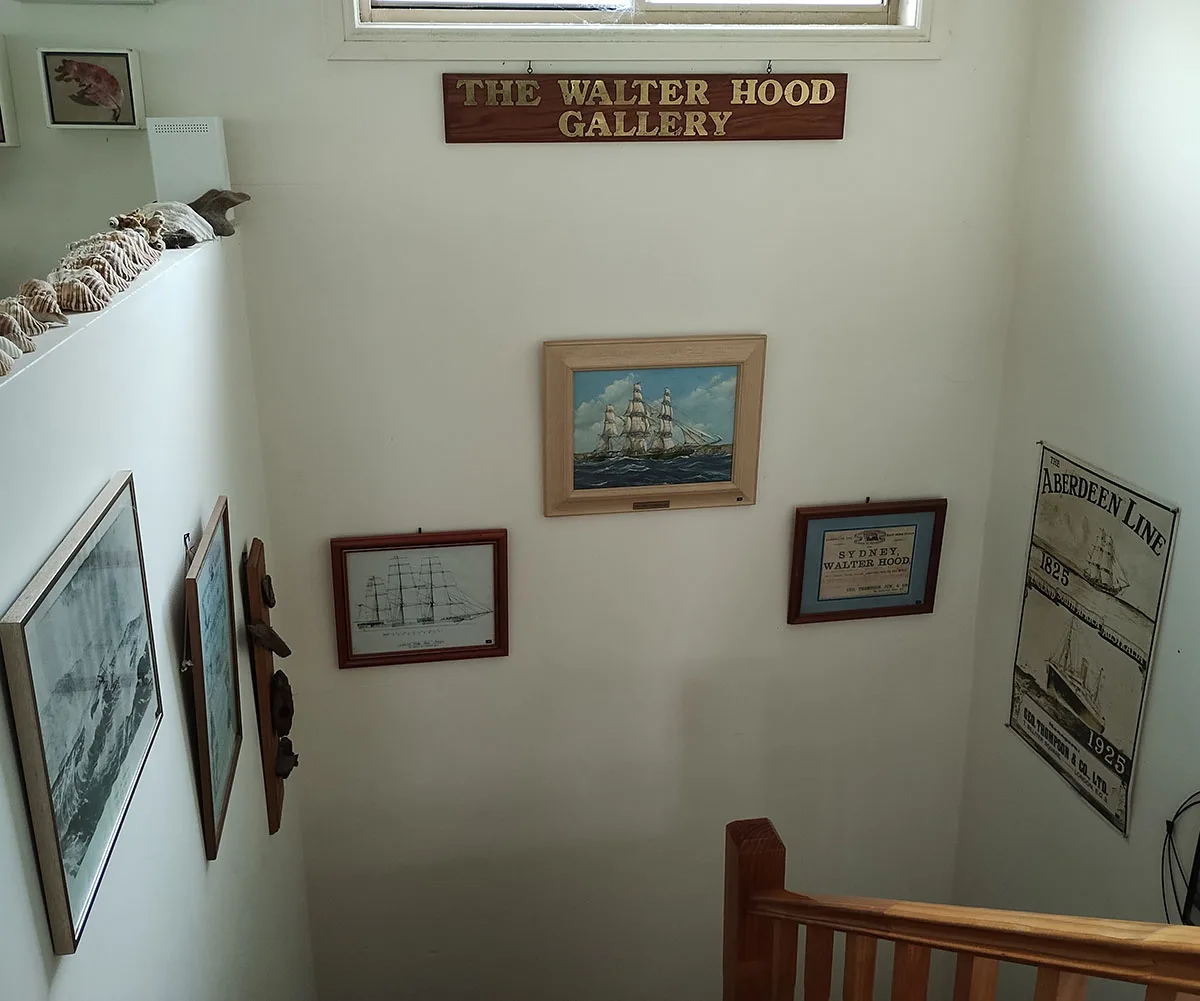
I trawled the annals of the state and national libraries for information.
Her final manifest still existed and included beer bottles and train rails, but no mention of the tiles.
I speculated they may have been used as ballast, or as part of the captain’s private venture.
Many questions remained unanswered, but the more I discovered about the Walter Hood, the more she consumed me.
Old newspaper clippings told me that the victims of the tragedy were buried beneath the monument.
I tracked down the great-great-grandson of one of the ship’s captains, living in Scotland, who shared memorabilia from the ship’s voyages with me.
In 1994, I published these discoveries and speculations in Fast Company: The Lively Times and Untimely End of the Clipper Ship Walter Hood.
Over the last 30 years, interest in the ship and its remains has grown, thanks in part to my book.
My grandchildren sometimes accompany me when I wander along Wreck Bay, and we can always find some relic of the ill-fated Walter Hood to add to our collection.


Share this post