





You know, most people really don’t know me,” Marilyn Monroe told Life’s Richard Meryman in the summer of 1962 just days before her untimely death.
Now, on what would have been her 100th birthday on June 1, a new book, I Wanna Be Loved By You – excerpted here for Woman’s Day – reveals 100 snapshots of her legendary life, from her traumatic childhood as Norma Jeane Mortenson to becoming Marilyn, how she navigated the highs and lows of Hollywood, her famous romances to what happened on the night she tragically died.
Were the Kennedys involved, was it a possible suicide or simply an accident?
THE FIRST PHOTOGRAPHS
When Norma Jeane turned up for work on a December day in 1944, she had no idea her life was about to change.
She had got a position at Radioplane, a factory at the Metropolitan Airport, Burbank, manufacturing remote-controlled pilotless aircraft through her mother-in-law, Ethel, who also worked for the company.
The job was monotonous, for 10 hours each day she inspected, sprayed and packed parachutes, and sometimes worked on the production line fitting together mechanical parts.
It wasn’t well paid either, but she was doing her bit for the war effort, an archetypal “Rosie the Riveter”.
The factory was owned by British-born Reginald Denny, who after serving as a gunner in the First World War established himself as a successful film actor in Hollywood.
Fellow actor and future US president Ronald Reagan, who then ran the First Motion Picture Unit, had contacted his friend Denny and arranged for a small group of photographers and moving picture men to take some publicity shots of female workers at Radioplane.
Among the group was army photographer Private David Conover, based at “Fort Roach”, named after the Hal Roach studio in Culver City.
David, then 25, was a shy, awkward man, with bifocals and a stutter.
He walked down the assembly line, taking a few shots with his Speedy Graphic camera, until he spotted one girl wearing a green blouse, a name tag hanging from the waistband of her grey tweed trousers.

.jpg?resize=380%2C285&format=auto)
It took him a while to realise what he’d just seen – her eyes held something that touched him – but he retraced his steps and, fighting his shyness, told her she should be a model.
He quickly took a photo of Norma Jeane holding a propeller.
The colour image, which David thought was merely “a static picture of a pretty girl”, is the first professional shot of the woman who would soon become Marilyn Monroe.
If he’d left it at this and moved on, perhaps we would never have heard of her.
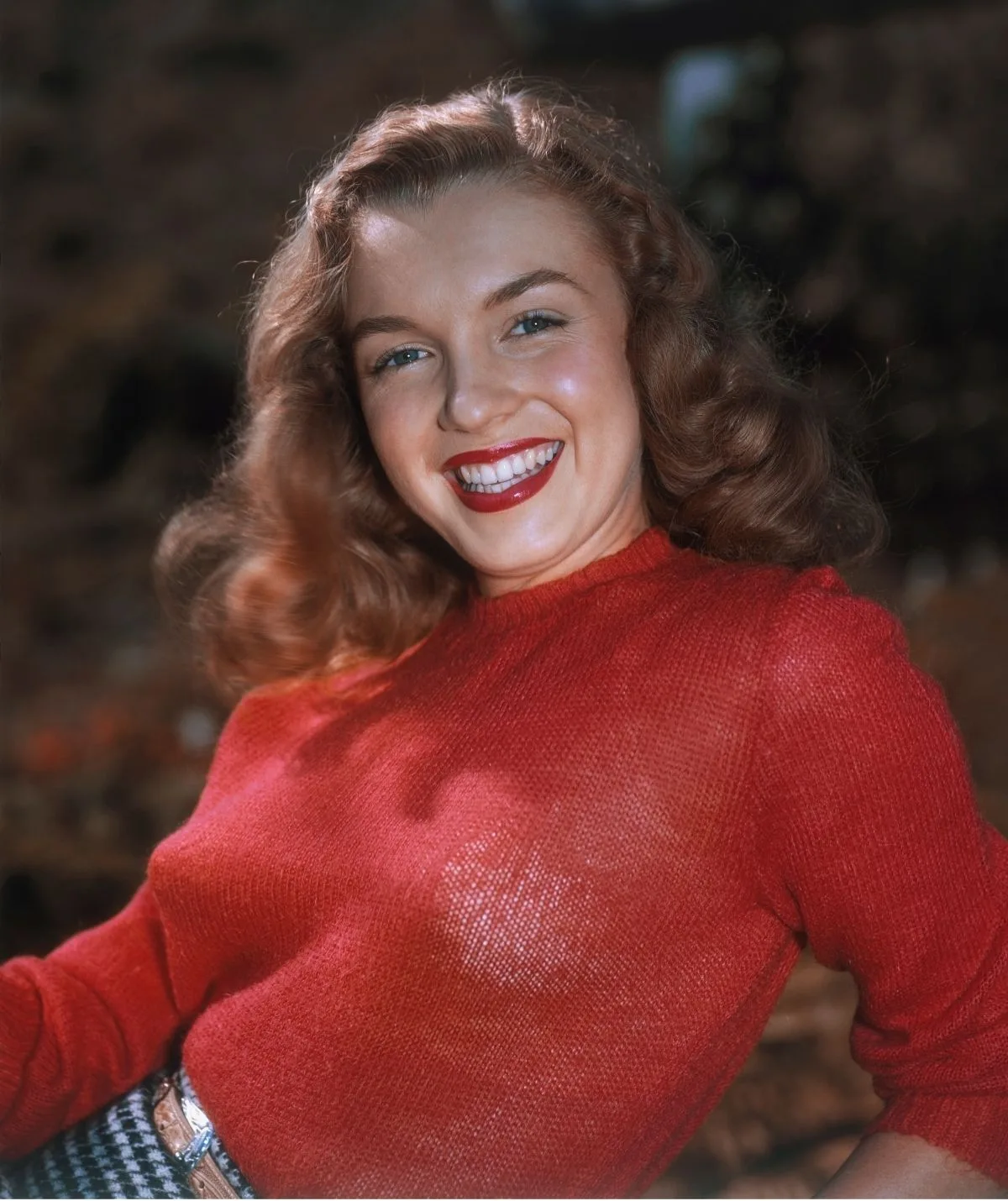
He then asked if it was possible for her to change into a sweater.
She went to her locker and returned wearing red cashmere. The result was nothing short of sensational.
“Now, singled out and with the attention of a camera and cameraman focused deliberately on her,” recalled David, “She came alive.”
That serendipitous photoshoot launched her into a modelling career.
DID NORMA JEANE GIVE BIRTH WHEN SHE WAS A TEENAGER?
It’s a claim made by a number of people, including her friend Amy Greene, and also Marilyn’s New York maid and cook Lena Pepitone, who worked for her from 1957 until her death.
Lena’s account of what Marilyn supposedly told her is that Norma Jeane was living with one of her foster families when, one day while everyone else was out, the man of the house invited her to have a glass of whiskey.
“Because she had drunk with the English people [the Atkinsons], she didn’t get suspicious of this unusual activity,” writes Lena in her 1979 ghostwritten memoir Marilyn Monroe Confidential. Then the man started kissing her.
“At first it was nice to be held and kissed. No one ever kissed me. But then… then he wouldn’t stop.”
Still, Norma Jeane kept her composure when she described how the foster parent ordered her to take her clothes off.
“I thought I had to do what he said. Whatever he said.” She was used to taking orders. Then he forced himself on her. “I didn’t scream. I didn’t do anything. It hurt a lot at first, then I didn’t feel anything. I just lay there. I just cried.”
According to Lena, it was when Norma Jeane returned to live with her guardian Grace Goddard and her husband that she discovered that she was pregnant.
She concealed the secret until it was too late, her only option was to have the baby.
“I was afraid she’d kill me when I told her,” Marilyn said about Grace.
“But she didn’t get mad at all. She just took me to a doctor. Later on, I went to a hospital where I had the baby… my baby. I was so scared but it was wonderful. It was a little boy.
“I hugged him and kissed him. I just kept touching him. I couldn’t believe this was my baby. I had him in the hospital for a few days. But when it was time for me to leave, the doctor and a nurse came in with Grace.
“They all looked real strange and said they’d be taking the baby. It was like I was being kicked in the head. I begged them, ‘Don’t take my baby.’ But Grace gave me a dirty look and said I was too young to take care of it. So they took my baby from me… and I never saw him again.”
MARILYN & JFK
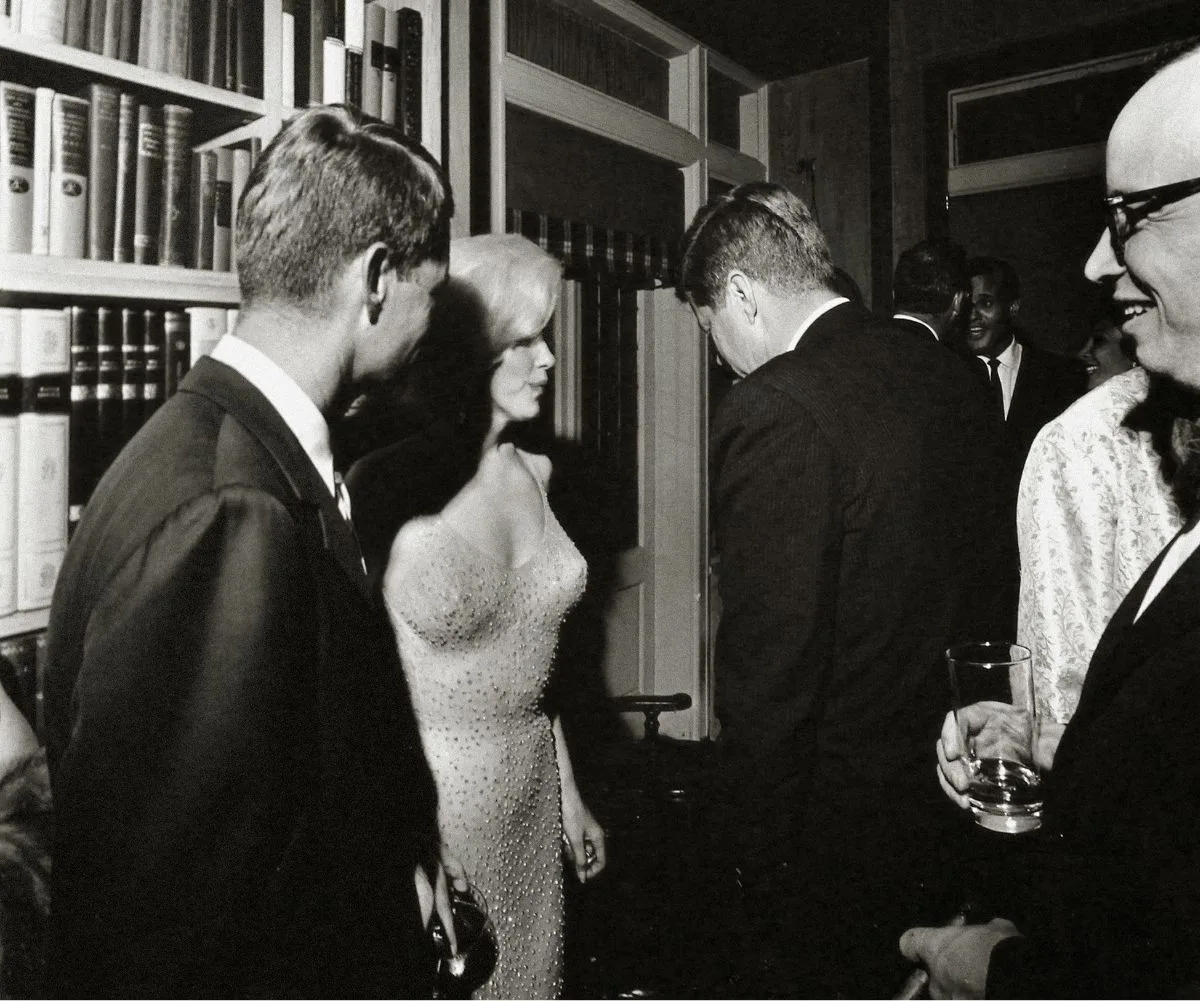
It’s clear that if Marilyn and the president – who, despite his philandering nature, had a public image as a happy family man – were conducting an affair, they would want to keep it out of the public eye.
In various biographies there have been dozens of witnesses – some more reliable than others – who have testified that Marilyn and JFK had been lovers.
The statements of Marilyn’s friends, such as Henry Rosenfeld, Ralph Roberts and Susan Strasberg – all of whom confirmed such a relationship between the two – should be taken seriously.
Henry maintained that Marilyn’s relationship with JFK started after he became president – “She was so excited you’d think she was a teenager” – but the sexual contact between them was confined to “a very, very few times”.
According to Henry, the couple used to meet up at a place on 53rd Street in New York, and that Marilyn travelled to Washington a couple of times, although she never made it into the White House itself.
“She would say, ‘I’m going to be with You Know Who again – he’s so important,’” said the wealthy New York dress manufacturer.
“She was going to bed with the President of the United States. She was awed by big names.”
On the Thursday before she died, she phoned Henry and asked him to accompany her to Washington for a pre-Broadway tryout of the new musical Mr President – she had heard that John Kennedy had been invited to a production on September 25 (on that occasion he was accompanied by the First Lady).
“I’m going, Henry,” she told him, “I’m going to Washington, and I want to go with you!”
According to masseur Ralph Roberts, Marilyn called JFK “the Gentleman Caller”.
At the end of March 1962, she phoned Ralph to tell him that the president had invited her to spend the weekend of March 24-25 in Palm Springs. Initially, the venue was going to be Frank Sinatra’s house, but this was changed at the last minute to Bing Crosby’s estate.
“I’m not sure I want to go,” Marilyn told Ralph.
“I’ve gotten to know the Gentleman Caller’s sister [Patricia] quite well. She’s a remarkable girl. I think she’s fantastic. We have a lot of laughs together.”
The next day, Marilyn rang Ralph again and told him she’d changed her mind, and that she was going to travel in disguise, as she often did.
“I’m wearing the black wig, carrying an attache case. I have an identification card with a picture of me wearing the wig.”
She went on to say that the president was anxious that she might be identified by her trademark sexy walk. “He says I would be recognised in the deepest part of Africa from it,” she said.
PILL POPPING
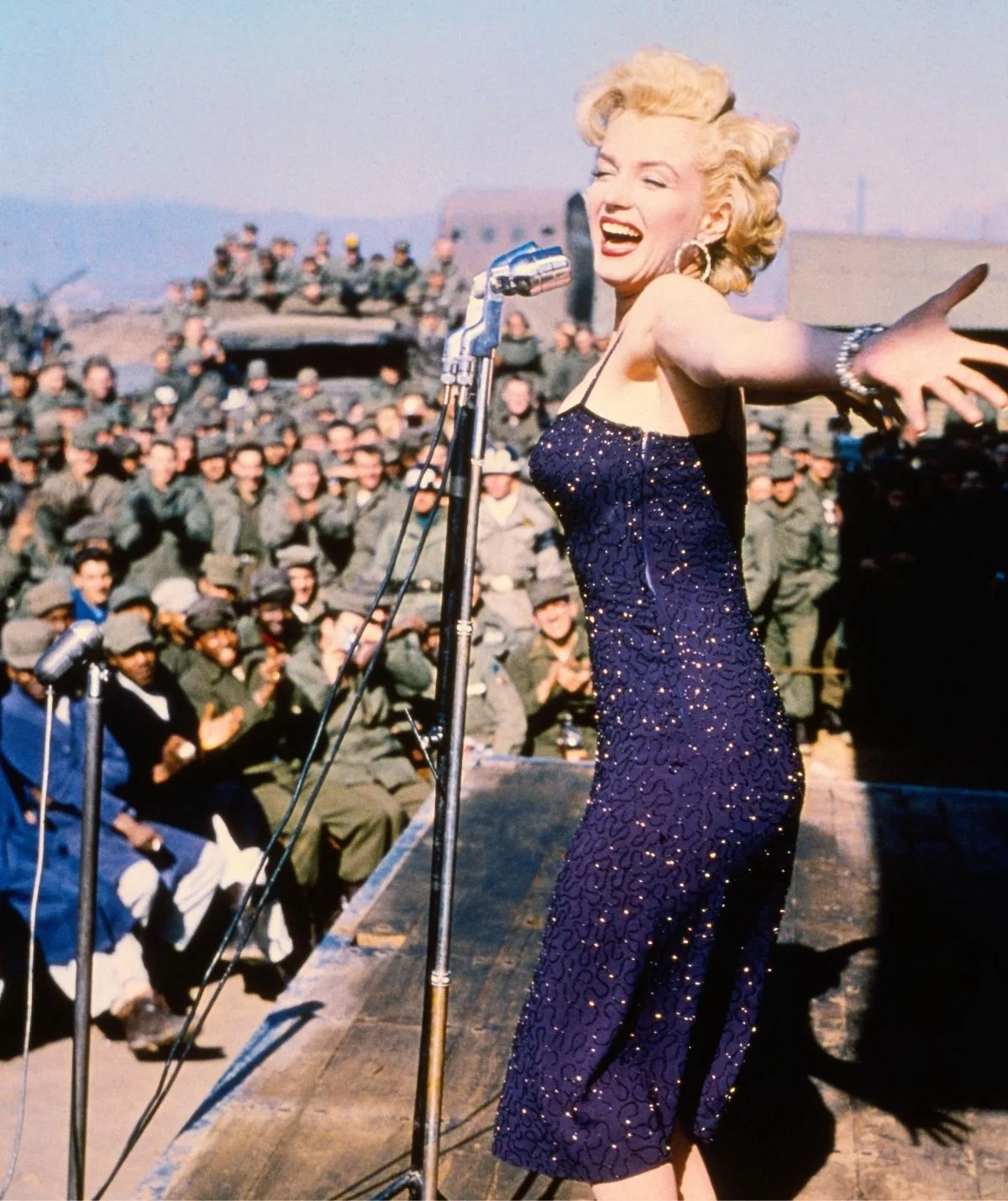
Despite taking decisive steps to reshape her career, other things were slipping out of control behind the scenes. The image of Marilyn the pill addict is fixed in popular consciousness.
It seems unlikely that she began to take drugs recreationally, what’s more probable is that she turned to pills as a way of relieving the agonies of her endometriosis.
“She knew that every month when she menstruated, she would have this terrible pain that only drugs could ease,” said Susan Strasberg. Maurice Zolotow recalled that when he visited Marilyn’s dressing room at the Fox studios lot he saw as many as 14 different boxes of pills.
Friends remembered how she would be driving in her car when suddenly she would be so overcome by pain that she would have to brake, stagger out of the car and fall to the ground in agony.
But how did the addiction to medication begin and what was its particular allure for her?
According to Amy Greene, Marilyn told her that she was “only a baby, 18 or 19” when she started taking pills.
In [her autobiography] My Story, Marilyn related how, soon after losing her initial short-term contract with Fox, she turned to sleeping pills while suffering the symptoms of a bad cold.
She hadn’t slept for several nights and felt she needed something to knock her out.
“I don’t usually recommend sleeping pills,” a doctor told her, “but you’ve been having hysterics too long. A good sleep will not only be good for your cold but cheer you up.”
In October the same year, it’s been reported that Marilyn turned to barbiturates when she was shooting a bit part in the musical comedy You Were Meant For Me (her small role ended up on the cutting room floor).
It’s not difficult to imagine why sedatives and tranquillisers appealed to Marilyn.
Her talent, as she saw it, was to be beautiful.
The pills smoothed away the sharp edges of anxiety that threatened to claw their way into her interior world.
They helped her smile when she wanted to scream.
They brought sleep in a terrifying world. They functioned as a salve to the stab wound of her psyche, a lesion that had been left red-raw and exposed since the days of her sexual abuse all those years ago.
In an unpublished letter, Marilyn’s psychiatrist Dr Greenson wrote that her habit of taking sleeping pills “was her way of escaping the miseries of life”.
In the same letter, which Dr Greenson wrote to Norman Rosten shortly after her death, he said, “Marilyn was a bottomless well, one could not fill her, with all the deep, deep holes her lack of family had left her with.”
AUGUST 4, 1962 – HER LAST DAY
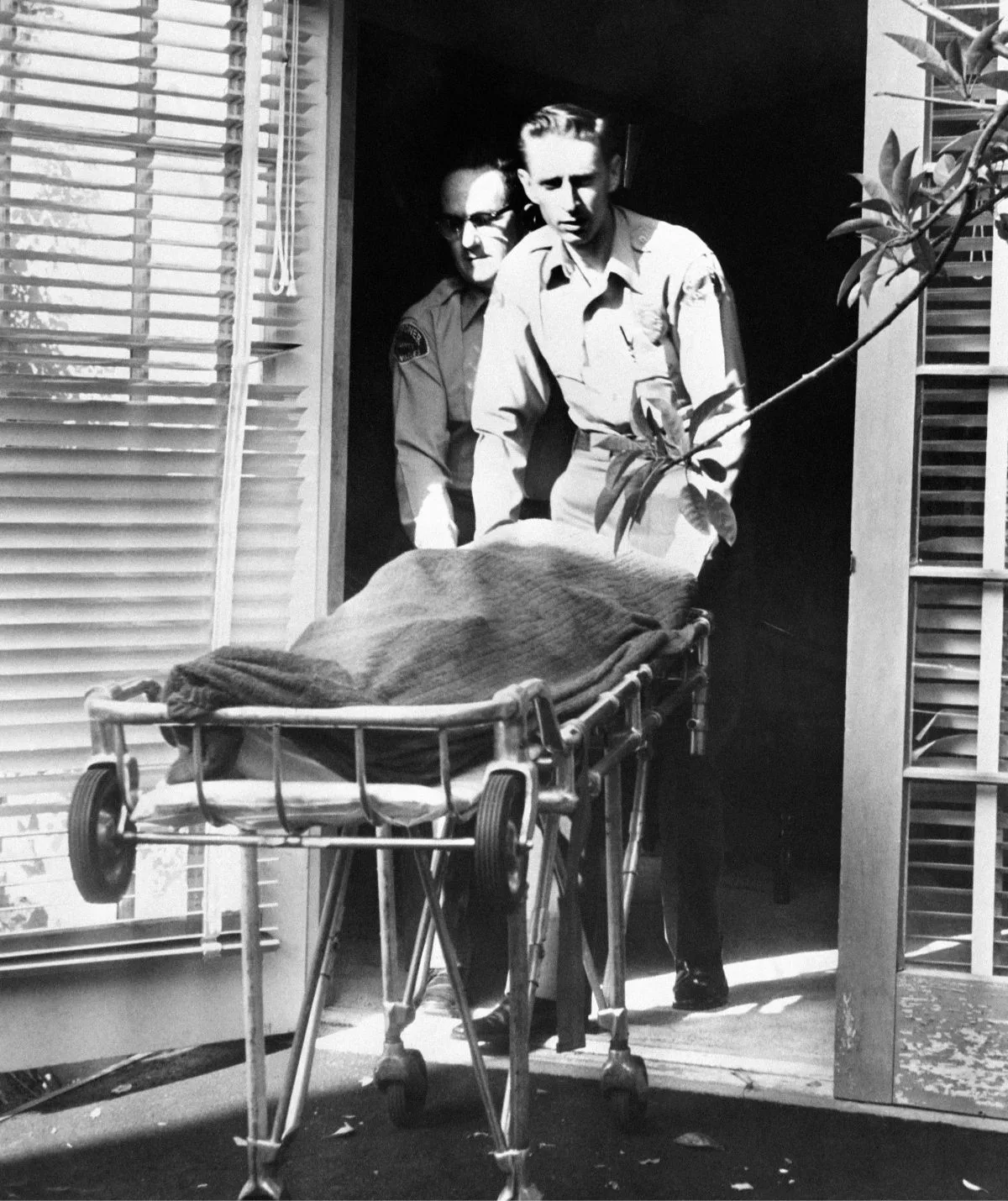
Marilyn Monroe woke up on her final day alive having slept poorly, aggravated by a bitter argument the previous night with her friend, Pat Newcomb.
Heavy with sleeping pills, a groggy Marilyn was visited at 10am by photographer Lawrence Schiller, who showed her nude shots he had taken on the set of Something’s Got To Give, which he hoped to sell to Playboy.
Just after noon, Pat emerged from the guest room after 12 hours of sleep – a luxury that deeply enraged the insomniac actress.
While Pat ate an omelette cooked by the housekeeper, Mrs Murray, Marilyn refused food, and the two women continued to bicker.
Marilyn spent much of the morning in her bedroom on the telephone, receiving congratulatory calls about the recent Life magazine interview with Richard Meryman that had just come out.
At 4.30pm, sounding increasingly depressed, Marilyn called her psychiatrist, Dr Greenson, who drove straight to her home.
He spent two-and-a-half hours calming her down as she complained about her insomnia and her friction with Pat.
Before leaving around 7.15pm, a worried Dr Greenson asked Mrs Murray to spend the night and made Marilyn promise to call him the next morning.
However, Marilyn was notoriously neurotic about being disturbed – Mrs Murray knew the actress would become enraged if awakened, so she avoided knocking on the door.
According to the official account, Mrs Murray woke around 3.30am and noticed the telephone cord running under Marilyn’s locked door.
Afraid of waking her, she went outside to look through the window and saw Marilyn lying face down and nude on the bed with the lights still on.
Panicked, she called Dr Greenson, who rushed over and broke into the bedroom.
Marilyn was dead, the telephone clutched fiercely in her right hand, suggesting she had tried to call him in her final moments.
When her physician, Dr Engelberg, arrived, he confirmed that rigor mortis had set in.
Marilyn’s bedside table was cluttered with pill bottles, including an empty vial of Nembutal that had not been there the previous day.
Dr Engelberg revealed he had prescribed the barbiturate, falsely believing Dr Greenson had authorised it.
In reality, Marilyn had lied to bypass Greenson’s strict monitoring.
Overwhelmed, the two doctors hesitated, waiting until 4.25am to notify the police.
Both ultimately shared the blame, as a distracted Dr Engelberg had failed to cross-check the lethal prescription.
I Wanna Be Loved By You by Andrew Wilson Simon & Schuster, $55
Anyone needing support can call Lifeline on 13 11 14.

